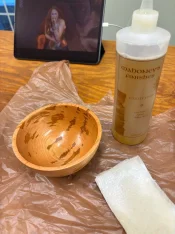
Carbide tools dry run

Jonkou

Member
Full Member
Messages
3,020
Reaction score
8,676
Location
Alton Bay NH
First name
John
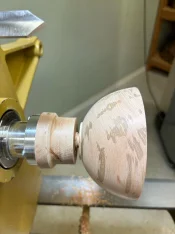
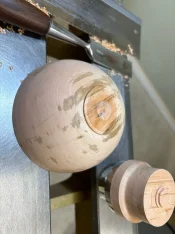
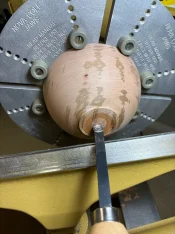
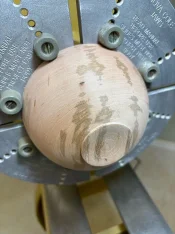
Recently agreed to teach Woodturning at the new Wolfeboro Makers Mill. First class will be a small bowl with newbys using carbide tools so did a dry run today using my Granddaughters tools to figure out how they work and took pics for a power point. Took about three times longer than my normal tools but learned a lot. Keeping it simple and will use just what comes with the lathes except will bring the Cole Jaws to share. Here’s the plan…
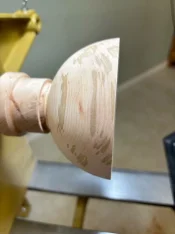
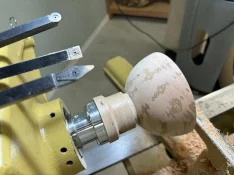
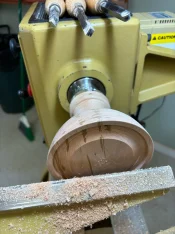
IMG_2015_Original.webp IMG_2018_Original.webp IMG_2019_Original.webp IMG_2020_Original.webp IMG_2022_Original.webp IMG_2023_Original.webp IMG_2024_Original.webp IMG_2025_Original.webp IMG_2029_Original.webp
 
  • Thread Starter Thread Starter
  • #3
Think you have covered most of the bases. Do you plan to teach sanding, also? Chuck
Here is the promotional write up for this class…

If you want to learn how to turn a bowl on a wood lathe this class is for you. We will cover safety, the fundamentals of lathe operations, how to use the cutting tools and other essential tools and equipment, design considerations, sanding techniques and finishing options. This is a hands on entry level session where everything will be provided for you to turn a bowl to completion. You will leave with not only a bowl but an experience to help you decide if woodturning is something you wish to explore further.
 
Last edited:
Hope you and the class have fun. I enjoy showing folks the fun of turning a finished project in typically a couple hours, allowing for breaks and plenty of safety points. Might want to experiment with sanding with the walnut oil to keep dust down. I’m going to try wet sanding with walnut oil myself, seems to be pretty effective and want to see if it works similar to friction polishing
 
Last edited:
first class I took was with carbide. Instructor had blanks already drilled to accept a screw chuck. Saved time so we could mount safely and quickly and get to turning. Have fun. Watch out for long sleeved students!
 
What would your normal go to be for this type of project? Certainly not educator level personally but Alancw mentioned rough turning for time management and I’ve found carbide to be better for finishing than start to finish. Depending on hardness those replacement blades can get pretty beat up and lose finishing ability, especially if it’s not a negative rake. Kudos for teaching! Might have saved a few dozen blood blisters if that was available here.
 
I use a square carbide for roughing. Enter the tool rest take the pounding than me. But then again I'm not a tradional turner. I went to the dark side in my tool choices and now use carbide almost exclusively.
 
  • Thread Starter Thread Starter
  • #9
1/2 or 5/8” parabolic bowl gouges, 40/40 grind for roughing, 70 degree traditional grind for reaching deep and 55 degree nose with swept wings for everything else.
 
Carbide tools are just scrapers, made out of carbide.
They are not mystical or magical, they just stay sharp longer.
They are not that hard to sharpen using a diamond hone.
 
Hunter carbides cut . . . might be different.
Most folks first experience with carbide are the (Easy Wood) tools. They typically are flat and have myriad shapes from pointed, to round and squared or radiussed. Very common to use similar cutters as used with Shelix planer cutters. My experience is they work great for harder woods were used like a scraper. When used with softer woods, tear out can be frustrating. Also can tend to be grabby due to amount of tool in contact with the piece. These flat cutters are usually available as HSS variants that dull quicker but sharpen well.
The style popularized by Hunter is a cupped cutter that typically apprpoaches the piece in a shear scrape orientation to shearing. Tear out is reduced with the cupped cutters. I use this type for hollowing through small entry holes in hollow forms because they are less grabby so less drama. If I’m hollowing harder woods,the cupped cutter takes longer but I get more control.
As to sharpening, I’ve not had good results trying to sharpen cupped cutters. Flat cutters results typically ok.

oh…and though carbide has its place, most turners who become comfortable with traditional spindle and bowl gouges will get smoother better control and reduced tear out over any of the carbides.
 
Last edited:
Recently agreed to teach Woodturning at the new Wolfeboro Makers Mill. First class will be a small bowl with newbys using carbide tools so did a dry run today using my Granddaughters tools to figure out how they work and took pics for a power point. Took about three times longer than my normal tools but learned a lot. Keeping it simple and will use just what comes with the lathes except will bring the Cole Jaws to share. Here’s the plan…
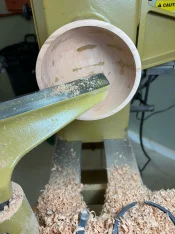

View attachment 252495View attachment 252496View attachment 252497View attachment 252498View attachment 252499View attachment 252500View attachment 252501View attachment 252502View attachment 252503
Did miss den Adel approve of the bowl? Was that other piece cored out of it?
 
Nothing beats a good gouge for bowls. These carbide tools are great for super hard pieces but can get grabby on softer woods. Let us know how it goes.
 
  • Thread Starter Thread Starter
  • #15
Did miss den Adel approve of the bowl? Was that other piece cored out of it?
Good eye… Sharon, Floor and Simone frequently share shop time with me so think she would.
Not cored, teach newbies to establish the rim and final wall thickness about an inch deep then hollow out in steps blending previous step an inch at a time to minimize the risk of blowing it up due to wall flex and poor technique.
 
Back
Top