I've got some of my Dad's layout tools and hammers that I want to clean the rust off. I was going to use Evaporust since I have it. What would you use to keep the rust from coming back? WD-40? I'm afraid to use that because of transfer to the wood (woodworking).

You are using an out of date browser. It may not display this or other websites correctly.
You should upgrade or use an alternative browser.
You should upgrade or use an alternative browser.
Rust Prevention
- Thread starter djg
- Start date

Good non big box store linseed oil. Heat it/warm it to thin it out a bit, wipe it on, let sit for ten minutes, wipe it clean leaving a barely perceptible film which will polymerize clear, becoming one with the metal and remain for quite a long time. Best rust prevention you can get. You can even heat the tool slightly to get the oil deeper into the pores and speed the drying, just be reasonable with the heat obviously. A hair dryer on hot, low fan is sufficient.I've got some of my Dad's layout tools and hammers that I want to clean the rust off. I was going to use Evaporust since I have it. What would you use to keep the rust from coming back? WD-40? I'm afraid to use that because of transfer to the wood (woodworking).
Truth be told, I've used the big box store garbage in the past and it works just fine too.
Last edited:

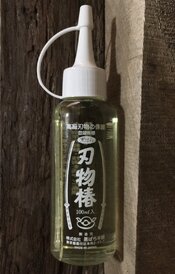
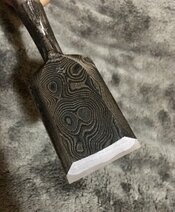
I apply Camellia oil (Tsubaki Abura) which is all natural on my hand tools to keep it from tarnishing and rusting. I also use it on my Japanese chef knives. It has been used for centuries where it was used in Japan on samurai blades. It is naturally safe that it is used for cosmetics and takes the worries out as it is all natural and does not contain chemicals which could be harmful on prolonged used.
Last edited:
Kyle @JerseyHighlander this is a great tip! Going to have to try this out. Does it matter what type of linseed oil as there is boiled linseed oil type?Good non big box store linseed oil. Heat it/warm it to thin it out a bit, wipe it on, let sit for ten minutes, wipe it clean leaving a barely perceptible film which will polymerize clear, becoming one with the metal and remain for quite a long time. Best rust prevention you can get. You can even heat the tool slightly to get the oil deeper into the pores and speed the drying, just be reasonable with the heat obviously. A hair dryer on hot, low fan is sufficient.
Truth be told, I've used the big box store garbage in the past and it works just fine too.

I do as Arn, with the same looking bottle of oil. I keep a shop rag along with the bottle of oil in a bigger plastic container. Rag stays clean (free of dust anyway) and once or twice a month will add a few more drops of oil to the already saturated rag.
Does a good job of keeping everything rust free, and that's in my unheated shed with a dirt floor. The tools are kept in a wooden machinists chest though, not laying out in the open.
Does a good job of keeping everything rust free, and that's in my unheated shed with a dirt floor. The tools are kept in a wooden machinists chest though, not laying out in the open.
Boiled will polymerize more quickly but raw will still polymerize, just staying liquid a little longer, which isn't necessarily a bad thing. I have raw linseed oil that I made myself from Flax oil that went rancid and my son @Bear Custom Builds uses on his knife blades and it works very well.Kyle @JerseyHighlander this is a great tip! Going to have to try this out. Does it matter what type of linseed oil as there is boiled linseed oil type?
If all you have is raw linseed oil, put some in a clear jar and put on a sunny window sill for several days. The UV exposure will kickstart the crosslinking process and it will polymerize like BLO.

Live in semi arid or desert- No rust... do nothing- use tools.

I live about half mile NW from the bay. The wind is predominately from the SE. All my stuff rust including anything on the house that's made from metal

Since family worked and managed Sears - I had a big can of Sears Gun Oil at first - when it ran out - generally used WD40, but then found the camellia oil and use it on knives and such. I like the linseed oil tip! will have to try that!
- Thread Starter Thread Starter
- #10
Anyone remember Cabinetman (RIP) from the other woodworking site? He was adamant about using any oil or wax on surfaces that touched wood. Such as hand planes and jointer/planer/tablesaw beds. He believed on a microscopic level, that would transfer to the wood and cause finishing problems. At least that's what I remember.
I did look into TopCote, but that stuff is crazy expensive. May go the Linseed oil way on a trial basis since it cures? hard? Some of these tools will never be used but are merely keepsakes. My Grandfather, whom I never knew, was a small town blacksmith and coffin maker in the early 1900s. I have some of his tools that Dad had just squirreled away and need attention now. Some that maybe he had actually made.
I did look into TopCote, but that stuff is crazy expensive. May go the Linseed oil way on a trial basis since it cures? hard? Some of these tools will never be used but are merely keepsakes. My Grandfather, whom I never knew, was a small town blacksmith and coffin maker in the early 1900s. I have some of his tools that Dad had just squirreled away and need attention now. Some that maybe he had actually made.
Starrett has something called M1 All Purpose Lubricant that is supposed to be very good - have not tried it, but a few friends have. A spray that dries to a hard shield they say.
I worked in several professional woodshops for many years, tablesaws among other things were always coated with something. I have used topcoat, it's ok, it is expensive and I didn't like the smell at all. Primary thing I used on all saw tables for decades and still do, is Butcher's Wax. Just like a car, wipe it on, let it dry to a haze, buff it off. Heavy sheet goods slide like it's an air hockey table. Never saw any perceptable issues with finishing. Worked in a shop once that would soak the tablesaw table & fence with an aerosol can of silicone... they were having massive finishing problems until I showed up and told them to stop with the sillycone. That stuff is horrible and persistent like nothing I've ever seen.Anyone remember Cabinetman (RIP) from the other woodworking site? He was adamant about using any oil or wax on surfaces that touched wood. Such as hand planes and jointer/planer/tablesaw beds. He believed on a microscopic level, that would transfer to the wood and cause finishing problems. At least that's what I remember.
I did look into TopCote, but that stuff is crazy expensive. May go the Linseed oil way on a trial basis since it cures? hard? Some of these tools will never be used but are merely keepsakes. My Grandfather, whom I never knew, was a small town blacksmith and coffin maker in the early 1900s. I have some of his tools that Dad had just squirreled away and need attention now. Some that maybe he had actually made.
If something is going to have an effect on a microscopic level, no worries, I can't see microscopically.

One shop essential for me is a squeeze bottle of 50-50 that is at hand at all times. (Thats 50% Deft / 50% lacquer thinner).
Using that on wood is expected. But the surprise is how well it preserves bare metal. I use it on those stamped wrenches you get with tools, angle iron, hammer heads, awls, whatever. Just give a quick wipe and you're done. And a side benefit of it being lacquer is you can build it up or remove it in an instant.
Using that on wood is expected. But the surprise is how well it preserves bare metal. I use it on those stamped wrenches you get with tools, angle iron, hammer heads, awls, whatever. Just give a quick wipe and you're done. And a side benefit of it being lacquer is you can build it up or remove it in an instant.

Genius!One shop essential for me is a squeeze bottle of 50-50 that is at hand at all times. (Thats 50% Deft / 50% lacquer thinner).
Using that on wood is expected. But the surprise is how well it preserves bare metal. I use it on those stamped wrenches you get with tools, angle iron, hammer heads, awls, whatever. Just give a quick wipe and you're done. And a side benefit of it being lacquer is you can build it up or remove it in an instant.

Camphor tablets are amazing for metal tools even guns for rust prevention. As they evaporate they coat everything with a thin film. Also there are these things called rust erasers I found for sharpening Japanese or high carbon knives and they work incredibly well. It’s some kind of light abrasives embedded in rubber. They remove rust like nothing but don’t leave scratch marks.