

JB_HI_JPN
Member
View attachment 283254Hello all,
I’ve been enjoying this forum for quite some time and figured it’s finally time to make a proper introduction. I hope you find this story somewhat interesting — if not, no worries, and no offense taken.
I’m Jorma Winkler. I’m a 5th-generation wood industry professional, with our family history in logging dating back to the late 1800s. My great-great-great-grandfather started the legacy in Northern California, and the generations that followed continued in the same region until my father “immigrated” to Hawaii Island in 1970, where he logged mostly eucalyptus for the pulp industry. When the pulp mill burned down in the ’70s, he pivoted into koa.
His company eventually grew to become the largest koa supplier at the time, until it came to an abrupt end in the early 2000s (that story is for another time).I started a new company to keep the wood business going and eventually found my niche in value-added manufacturing for the music and architectural industries, primarily producing veneers.
GrowiView attachment 283256ng up watching my father—and many other relatives—busting their asses as loggers, sawmillers, heavy-equipment operators, and mechanics, I realized early on that those weren’t my strongest skills. Sales and IT have always been my forte. That said, I can still run a chainsaw, mill a log, build and operate a kiln, and run just about any woodworking machine you throw at me—just preferably not if I don’t have to These days, I focus on finding hard-to-acquire woods that woodworkers around the world want. I’ve been fortunate to have had koa literally growing in our backyard, and it remains my primary species, but I also buy and process many other exotic woods.
So why “Konnichiwa” in the subject line? In 1997, I moved to Japan expecting to stay a couple of years. Instead, I met my wife, had kids, built a home, an office, and a business—all while still “commuting” to Hawaii to run a koa operation and woodworking factory on the Big Island and Oahu. About a year before COVID, we decided to downsize and shut down most of our Hawaii manufacturing.
When COVID hit, I shifted almost everything to Japan. Getting “stuck” in Hawaii for half a year gave me time to reassess both my life and business priorities. Being separated from my family—and not legally allowed to return to the country where I live—was difficult, but in hindsight, it became a turning point for the better.
 Like many challenges in life, it ultimately led to something positive.
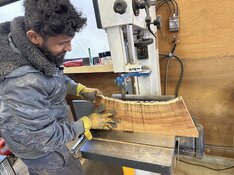
Today, we operate a small woodworking factory in Japan called Maikai Wood Hawaii. We have two Sri Lankan refugees who found me quite literally in the mountains of Gifu looking for work. That was three years ago. They now hold legal visas sponsored by my company and have been trained to take a log all the way through to dried lumber and resawn veneers for customers around the world. They also grade material for curl, figure, and flat- or quarter-sawn structure.
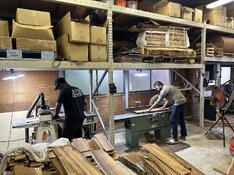 With their help, in 2025 we processed close to 3,000 board feet of koa logs and turned them into so many ukulele and guitar sets and other parts. It sound like a pretty low production level, and yes, it is, if dealing with commodity woods, but this is Koa! Every square inch matters, and we make sure we don't waste a single gram. Since they were all salvage logs, most all of them were heavily rotted, but incredibly beautiful inside. We’ve also been steadily building our e-commerce presence for the Japanese domestic market. Had it not been for the tariff wars, we would have made everything on our site available worldwide as well. It seems there’s always an interesting challenge to overcome.
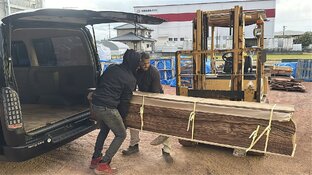
Over the last few years, we’ve been importing various species from around the world, as well as purchasing Japanese logs and lumber at some of the largest auctions in Gifu Prefecture, which happen to be very near my factory. We’ve built up a collection of Japanese hardwoods such as Tochi, Keyaki, Kuri, Kaki, Mizunara, and Shira Kashi. We’re still working through the details of each species on our websites, but please feel free to take a look if you’re curious.
As for supplying wood to forum members—we can, but currently only in pallet-sized shipments from Japan or Hawaii. We’re still working on solutions for smaller orders to the US. Since the tariff wars began, Japan Post stopped accepting commercial shipments to the US, which used to be our most reasonable option for small quantities. If we use Japan Post now, it has to be personal shipments under $100 in value. Sending something as a “present” is often the easiest way—but I’m sure that would result in a flood of requests for gifted koa and exotic woods! I’ll work on it.
— Jorma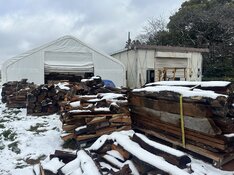
PS - it turns out Koa likes the snow, even if it is in Japan - as it should - the best Koa grows at the highest levels of Mauna Kea and Mauna Loa where it gets snow!
I’ve been enjoying this forum for quite some time and figured it’s finally time to make a proper introduction. I hope you find this story somewhat interesting — if not, no worries, and no offense taken.
I’m Jorma Winkler. I’m a 5th-generation wood industry professional, with our family history in logging dating back to the late 1800s. My great-great-great-grandfather started the legacy in Northern California, and the generations that followed continued in the same region until my father “immigrated” to Hawaii Island in 1970, where he logged mostly eucalyptus for the pulp industry. When the pulp mill burned down in the ’70s, he pivoted into koa.
His company eventually grew to become the largest koa supplier at the time, until it came to an abrupt end in the early 2000s (that story is for another time).I started a new company to keep the wood business going and eventually found my niche in value-added manufacturing for the music and architectural industries, primarily producing veneers.
GrowiView attachment 283256ng up watching my father—and many other relatives—busting their asses as loggers, sawmillers, heavy-equipment operators, and mechanics, I realized early on that those weren’t my strongest skills. Sales and IT have always been my forte. That said, I can still run a chainsaw, mill a log, build and operate a kiln, and run just about any woodworking machine you throw at me—just preferably not if I don’t have to
These days, I focus on finding hard-to-acquire woods that woodworkers around the world want. I’ve been fortunate to have had koa literally growing in our backyard, and it remains my primary species, but I also buy and process many other exotic woods.So why “Konnichiwa” in the subject line? In 1997, I moved to Japan expecting to stay a couple of years. Instead, I met my wife, had kids, built a home, an office, and a business—all while still “commuting” to Hawaii to run a koa operation and woodworking factory on the Big Island and Oahu. About a year before COVID, we decided to downsize and shut down most of our Hawaii manufacturing.
When COVID hit, I shifted almost everything to Japan. Getting “stuck” in Hawaii for half a year gave me time to reassess both my life and business priorities. Being separated from my family—and not legally allowed to return to the country where I live—was difficult, but in hindsight, it became a turning point for the better.
 Like many challenges in life, it ultimately led to something positive.
Today, we operate a small woodworking factory in Japan called Maikai Wood Hawaii. We have two Sri Lankan refugees who found me quite literally in the mountains of Gifu looking for work. That was three years ago. They now hold legal visas sponsored by my company and have been trained to take a log all the way through to dried lumber and resawn veneers for customers around the world. They also grade material for curl, figure, and flat- or quarter-sawn structure.
 With their help, in 2025 we processed close to 3,000 board feet of koa logs and turned them into so many ukulele and guitar sets and other parts. It sound like a pretty low production level, and yes, it is, if dealing with commodity woods, but this is Koa! Every square inch matters, and we make sure we don't waste a single gram. Since they were all salvage logs, most all of them were heavily rotted, but incredibly beautiful inside. We’ve also been steadily building our e-commerce presence for the Japanese domestic market. Had it not been for the tariff wars, we would have made everything on our site available worldwide as well. It seems there’s always an interesting challenge to overcome.
Over the last few years, we’ve been importing various species from around the world, as well as purchasing Japanese logs and lumber at some of the largest auctions in Gifu Prefecture, which happen to be very near my factory. We’ve built up a collection of Japanese hardwoods such as Tochi, Keyaki, Kuri, Kaki, Mizunara, and Shira Kashi. We’re still working through the details of each species on our websites, but please feel free to take a look if you’re curious.
As for supplying wood to forum members—we can, but currently only in pallet-sized shipments from Japan or Hawaii. We’re still working on solutions for smaller orders to the US. Since the tariff wars began, Japan Post stopped accepting commercial shipments to the US, which used to be our most reasonable option for small quantities. If we use Japan Post now, it has to be personal shipments under $100 in value. Sending something as a “present” is often the easiest way—but I’m sure that would result in a flood of requests for gifted koa and exotic woods!
I’ll work on it.— Jorma
PS - it turns out Koa likes the snow, even if it is in Japan - as it should - the best Koa grows at the highest levels of Mauna Kea and Mauna Loa where it gets snow!
Last edited by a moderator:


