Berry trees

Big Ry

Member
Full Member
Messages
1,685
Reaction score
1,879
Location
Philadelphia, PA
First name
Ryan
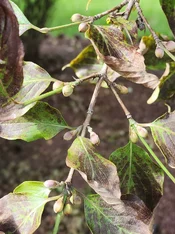
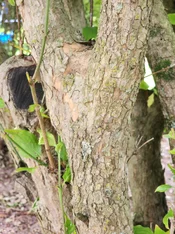
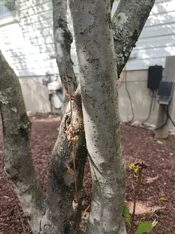
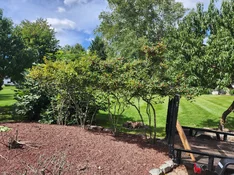
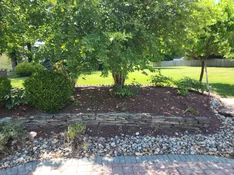
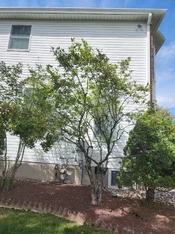
I have 7 trees in my yard that appear to be from 2-3 different species (or cultivars of the same species?).

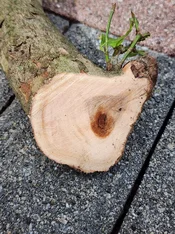
The two largest are identical from everything i can tell. I've been calling these "serviceberry" based on their multi-stalk growth type and the fact that they produce tiny berry-like buds (which never seem to mature into a fruit or flower). I cut a branch off one of these today and discovered brown heartwood. It was also very hard wood, very hard to cut. Tree identification apps are suggesting it's a dogwood.
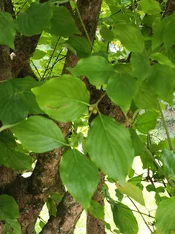
20260608_140930.webp 20260923_111133.webp 20260923_111054.webp 20260923_111117.webp 20260923_113717.webp

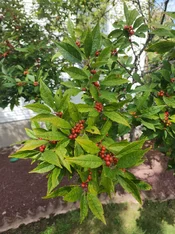
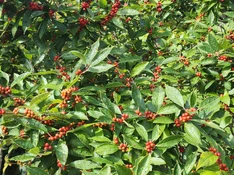
The second batch of trees are much smaller (6-9ft high), with skinnier stalks, jagged edge leaves, and lots and lots of red berries. The wood identification app is saying this is black alder aka winterberry Holly (ilex genus):
20260923_125958.webp 20260923_130017.webp 20260923_130037.webp 20260923_130759.webp 20260923_130816.webp
 
Last edited:
The first one is dogwood. Which one is your next question. The others I don’t know well enough to say anything about.
 
  • Thread Starter Thread Starter
  • #4
The first one is dogwood. Which one is your next question. The others I don’t know well enough to say anything about.
I'm very glad to find out that it's dogwood, as I'm really liking dogwood lol. It is noticeable different grain from my flowering dogwood. It looks similar to the cornelian cherry that daveflutes got me from Octopus, so here's to hoping that's what it is!
 
I'm very glad to find out that it's dogwood, as I'm really liking dogwood lol. It is noticeable different grain from my flowering dogwood. It looks similar to the cornelian cherry that daveflutes got me from Octopus, so here's to hoping that's what it is!
I don’t want to get your hopes up but it looks like a match. I didn’t want to say it because it isn’t native in America. Now that you mention it, the resemblance is striking.
 
  • Thread Starter Thread Starter
  • #6
I don’t want to get your hopes up but it looks like a match. I didn’t want to say it because it isn’t native in America. Now that you mention it, the resemblance is striking.
A trusted friend in the wood identification world on Facebook also said cornelian cherry. He's from the UK for whatever that's worth lol.
 
A trusted friend in the wood identification world on Facebook also said cornelian cherry. He's from the UK for whatever that's worth lol.
If you get a wood ID post I can compare end grain to my samples. My samples are 100% correct as they come from a small orchard where they have been harvesting the berries for over 150 years. My particular specimen was only 50 years old but is quite good to compare too.

The berries are surprisingly tasty. A very good mix of bitterness sweetness and tartness. The red ones are sweeter than the yellow ones.

Also, is that trusted friend Steve earis?
 
  • Thread Starter Thread Starter
  • #8
If you get a wood ID post I can compare end grain to my samples. My samples are 100% correct as they come from a small orchard where they have been harvesting the berries for over 150 years. My particular specimen was only 50 years old but is quite good to compare too.

The berries are surprisingly tasty. A very good mix of bitterness sweetness and tartness. The red ones are sweeter than the yellow ones.

Also, is that trusted friend Steve earis?
That'll have to wait as i left the wood outside and it's 1:15am here lol. There isn't a ton of heart wood either, so hopefully it's enough to confirm identification without having to cut a bigger piece off the tree. The tree is coming down soon, but not yet. Dogwood seems to be problematic to dry, so i want to be careful with this one.
 
That'll have to wait as i left the wood outside and it's 1:15am here lol. There isn't a ton of heart wood either, so hopefully it's enough to confirm identification without having to cut a bigger piece off the tree. The tree is coming down soon, but not yet. Dogwood seems to be problematic to dry, so i want to be careful with this one.
That is fine. A branch will do. This species is usually identified from the sapwood anyway as heartwood is rare and usually starts the end of the trees life.

It is very very hard to dry. Air dry it by cutting it into 3 foot lengths, sealing the ends and leaving on bark until you get end checking. Then saw into boards or blocks (if they are thick it may be worth encasing them in a thin layer of paste wax), sticker and continue air drying. Try to do it in an area with uniform humidity and temperature but not extremely dry or hot conditions. After you measure acceptably low mc in air drying (a year per inch is a good estimate) you can kiln dry. Kiln dry it as if it was plum.
 
It’s that time of year when mice like to find a nice warm place cause cold weather is on the way. You might want to close the front door to the hotel.

IMG_3317.webp
 
  • Thread Starter Thread Starter
  • #12
Also, is that trusted friend Steve earis?
Yes. We mostly talk Lignum and other super dense species, but for him to throw out Cornus Mas probably means he has a relatively high degree of confidence in that identification.

Whatever it is, the fruits never mature so I cant taste or ID based on those.
 
Yes. We mostly talk Lignum and other super dense species, but for him to throw out Cornus Mas probably means he has a relatively high degree of confidence in that identification.

Whatever it is, the fruits never mature so I cant taste or ID based on those.
Nice. I was referring to my sample being IDed by that method. Thereby making it a very good reference sample if you ever wanted to confirm.
 
  • Thread Starter Thread Starter
  • #14
That is fine. A branch will do. This species is usually identified from the sapwood anyway as heartwood is rare and usually starts the end of the trees life.

It is very very hard to dry. Air dry it by cutting it into 3 foot lengths, sealing the ends and leaving on bark until you get end checking. Then saw into boards or blocks (if they are thick it may be worth encasing them in a thin layer of paste wax), sticker and continue air drying. Try to do it in an area with uniform humidity and temperature but not extremely dry or hot conditions. After you measure acceptably low mc in air drying (a year per inch is a good estimate) you can kiln dry. Kiln dry it as if it was plum.
Ill do that today and post photos here.

Do you want to keep bark on to slow drying? My flowering Dogwood was quick to split down the middle all the way to the pith, so I am a bit concerned about that. I have an outdoor deck box that I intend to use for storing/drying all this landscape wood I'll be cutting down. Anything I mill will also get Borax treatment.
 
Ill do that today and post photos here.

Do you want to keep bark on to slow drying? My flowering Dogwood was quick to split down the middle all the way to the pith, so I am a bit concerned about that. I have an outdoor deck box that I intend to use for storing/drying all this landscape wood I'll be cutting down. Anything I mill will also get Borax treatment.
I leave the bark on. Vienna has somewhat stable humidity though and as I live near the Danube the air never gets extremely dry except in winter. If you want to go extremely safe, you can get it steamed, remove the bark then and then seal with something cheap like paste wax. Steaming will make it dry much better and will bring out a light pink to fawn tone in the wood.
 
  • Thread Starter Thread Starter
  • #16
I leave the bark on. Vienna has somewhat stable humidity though and as I live near the Danube the air never gets extremely dry except in winter. If you want to go extremely safe, you can get it steamed, remove the bark then and then seal with something cheap like paste wax. Steaming will make it dry much better and will bring out a light pink to fawn tone in the wood.
Interesting. Can I just bake it in tin foil to steam in its own juices? lol That's normally how I bug-kill these woods when I bring them inside. Did the same for the flowering dogwood.

Its pretty humid in general in Pennsylvania, and we've had a pretty wet year on top of that. So heading into the fall its far from dry outside. I also figured a deck box would create a sort-of greenhouse effect when loaded with wet woods, which may help to safely dry? I'll just have to watch for molding and such I guess.
 
Cornus mas spring flowers are compound and not wildly attractive.
View attachment 293644
web photo

And fall fruit are 1/2" - 3/4" cherry like in shades of red and yellow.
View attachment 293645
Yes. And they are very tasty.
Interesting. Can I just bake it in tin foil to steam in its own juices? lol That's normally how I bug-kill these woods when I bring them inside. Did the same for the flowering dogwood.

It’s pretty humid in general in Pennsylvania, and we've had a pretty wet year on top of that. So heading into the fall its far from dry outside. I also figured a deck box would create a sort-of greenhouse effect when loaded with wet woods, which may help to safely dry? I'll just have to watch for molding and such I guess.
The deck box sounds good. Steaming is actually easy. Take a big plastic sheet, loosely wrap it around the wood, tape one end into a tube, connect that tube into the opening of a pot of water, bring that water to a boil and let it sit for an hour or two per inch of thickness. You may have to refill the water. Dan santana bows has a good video on it on YouTube. He does it for bowstaves but it works the same way. The hot shower trick doesn’t work for thicker pieces. Oh. And make the opening on the other end of the plastic sheet as small as you can while still allowing the steam to flow. This will also kill off most bugs but promote mold growth. Use that borax.
 
  • Thread Starter Thread Starter
  • #19
Yes. And they are very tasty.

The deck box sounds good. Steaming is actually easy. Take a big plastic sheet, loosely wrap it around the wood, tape one end into a tube, connect that tube into the opening of a pot of water, bring that water to a boil and let it sit for an hour or two per inch of thickness. You may have to refill the water. Dan santana bows has a good video on it on YouTube. He does it for bowstaves but it works the same way. The hot shower trick doesn’t work for thicker pieces. Oh. And make the opening on the other end of the plastic sheet as small as you can while still allowing the steam to flow. This will also kill off most bugs but promote mold growth. Use that borax.
A couple hours hardly seems long enough to do anything
 
Back
Top