

Chinese Pistachio/Pistache (pistacia chinensis Bunge) -
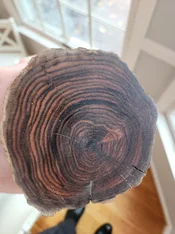
Here is another one of the cool pieces I got from @Byron Barker; it might be my favorite of the bunch. This was a recovered buried log, which spent an undetermined amount of time buried. It was at least long enough for the sapwood to rot away.
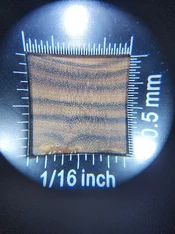
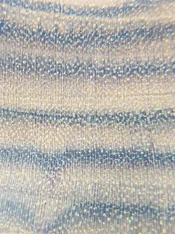
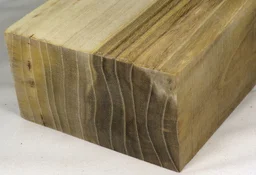
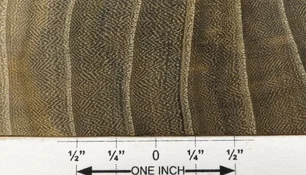
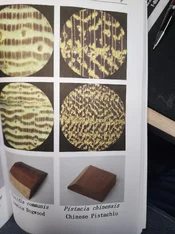
I initially questioned the identification of this piece, because I was anticipating seeing the characteristic "herringbone" arrangement of pores you see in pistacia species. Even after cleaning up the end grain and looking under magnification, I still struggled to recognize this type of pattern in the wood. However, after viewing it on my computer and zooming in further, it appears that the pattern is present, its just extremely small. The relatively small vasicentric parenchyma of this particular log make it harder to "connect the dots" with this pattern. And the prominent rays also serve to mask the pattern. It goes without saying, but regional/environmental differences can explain differences in pore diameter, pore density, parenchyma, growth ring boundaries, etc. Its not clear, what (if anything) being buried underground may have done to the appearance of the grain.
Hobbit House (Sample from @Mr. Peet!):
Atlas of Hardwood Identification:
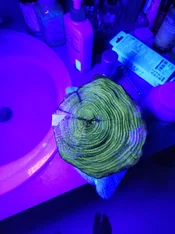
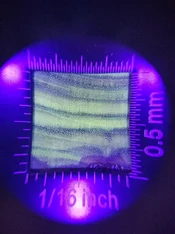
There are other material characteristics that point to an accurate ID with this piece, not the least of which is the wood's UV response. It glows blindingly bright green under UV - the wood, water extractive, alcohol extractive...everything. It rivals black locust for UV response. Its something to see, that's for sure!
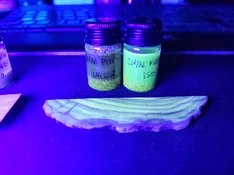
Some other material properties are as follows -
Density: Undetermined. I don't have much of this stuff, so I didn't want to cut it up into an easily measurable shape. Suffice it to say, its extremely dense! I didn't think estimating density based on an oblong log would be accurate enough to be worth the effort.
Color: Only the end grain is exposed, and from that I can see a dark chocolate brown with alternating black stripes. The black stripes do not seem to coincide with the faint growth ring boundaries, so I am unsure what caused this black coloration.
Scent: I'm not the greatest with smells (12 years of smoking!). This wood had a familiar woody scent when worked, but I was unable to place it. Ive never worked pistacia species before, so the familiarity was not related to another pistacia.
Froth test: negative
Hardness: This is highly subjective, but this wood is very hard. I cut my sample for identification with a japanese pull saw and hand sanded it for photos. It was both difficult to cut and difficult to sand. Silica content plays a factor in these working properties, but I would imagine this wood is 1500lbf at a bare minimum (probably higher). Forestry(dot)com puts it at 1,570lbf (https://forestry.com/lumber/chinese-pistache-lumber/), but I honestly think this sounds low for my log at least. For comparison, Pistacia vera is 1920lbf.
Overall, this is a really cool wood and one I'd love to get more of. The grain is very attractive and has a nice hand feel. I can tell it will take a nice polish as well.
Here is another one of the cool pieces I got from @Byron Barker; it might be my favorite of the bunch. This was a recovered buried log, which spent an undetermined amount of time buried. It was at least long enough for the sapwood to rot away.
I initially questioned the identification of this piece, because I was anticipating seeing the characteristic "herringbone" arrangement of pores you see in pistacia species. Even after cleaning up the end grain and looking under magnification, I still struggled to recognize this type of pattern in the wood. However, after viewing it on my computer and zooming in further, it appears that the pattern is present, its just extremely small. The relatively small vasicentric parenchyma of this particular log make it harder to "connect the dots" with this pattern. And the prominent rays also serve to mask the pattern. It goes without saying, but regional/environmental differences can explain differences in pore diameter, pore density, parenchyma, growth ring boundaries, etc. Its not clear, what (if anything) being buried underground may have done to the appearance of the grain.
Hobbit House (Sample from @Mr. Peet!):
Atlas of Hardwood Identification:
There are other material characteristics that point to an accurate ID with this piece, not the least of which is the wood's UV response. It glows blindingly bright green under UV - the wood, water extractive, alcohol extractive...everything. It rivals black locust for UV response. Its something to see, that's for sure!
Some other material properties are as follows -
Density: Undetermined. I don't have much of this stuff, so I didn't want to cut it up into an easily measurable shape. Suffice it to say, its extremely dense! I didn't think estimating density based on an oblong log would be accurate enough to be worth the effort.
Color: Only the end grain is exposed, and from that I can see a dark chocolate brown with alternating black stripes. The black stripes do not seem to coincide with the faint growth ring boundaries, so I am unsure what caused this black coloration.
Scent: I'm not the greatest with smells (12 years of smoking!). This wood had a familiar woody scent when worked, but I was unable to place it. Ive never worked pistacia species before, so the familiarity was not related to another pistacia.
Froth test: negative
Hardness: This is highly subjective, but this wood is very hard. I cut my sample for identification with a japanese pull saw and hand sanded it for photos. It was both difficult to cut and difficult to sand. Silica content plays a factor in these working properties, but I would imagine this wood is 1500lbf at a bare minimum (probably higher). Forestry(dot)com puts it at 1,570lbf (https://forestry.com/lumber/chinese-pistache-lumber/), but I honestly think this sounds low for my log at least. For comparison, Pistacia vera is 1920lbf.
Overall, this is a really cool wood and one I'd love to get more of. The grain is very attractive and has a nice hand feel. I can tell it will take a nice polish as well.
Last edited:

