• New Woodbarter Hats Are Available!!! Scroll down on the main page to the Member Activities & Site Support, Then click on Wood Barter SCHWAG and go to the topics on hats by Woodtickgreg to order your hat. There's only a limited quanity, so don't wait to get yours.

East Asian (Chinese) penetrative finishing techniques

Big Ry

Member
Full Member
Messages
1,306
Reaction score
1,472
Location
Philadelphia, PA
First name
Ryan
I have an acquaintance here in PA who owns a woodworking business that produces their own finishes. He's been supplying me all of his products for free in exchange for an honest evaluation and review, which I'm more than happy to do!

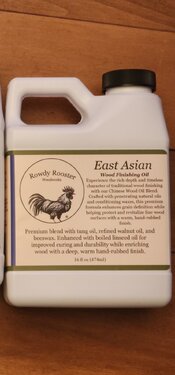
In his latest package, be sent me a new product that he calls East Asian wood finishing oil. I don't know anything about regional finishing techniques or materials, certainly not Asian techniques and materials (beyond the use of tung).

Does anyone have a good resource for such techniques and materials that I could review prior to evaluating his new wood finish? I should do my due diligence by at least establishing some cursory knowledge of the subject.

Screenshot_20260610_150142_Photos.jpg
 

trc65

Member
Full Member
Messages
7,468
Reaction score
23,394
Location
Cameron, Illinois
First name
Tim
When it comes to oil finishes, not sure there is any real differences in finish techniques regionally. There will be slight differences between individuals, but there is nothing in this mix that would suggest any different techniques than what you would use with tung oil alone.

Basically saturate the wood and keep applying as long as the wood absorbs it (15-20 min). Then wipe dry and wipe any seepage periodically. Could be one application and buff, or repeated applications after each dries. Variation may be to apply with high grit sandpaper (400-600x) to create a slurry and fill pores to a degree. If one wanted to "build" with multiple layers, a light sanding between coats might also be advised

Calling this an "East Asian" oil finish is nothing more than marketing. Technically every finish with tung oil is East Asian. This is nothing more than a catalyzed oil mix with some bees wax. I also don't see any need for three oils, other than the BLO will darken the wood a little more than the tung.

If the BLO is being added just for the catalyzing components, I would skip the BLO and just add the catalyzer to the tung. As far as that goes, I see no benefit to adding walnut oil to the tung either. Maybe a three oil mix sounds more "exotic" to the unknowing consumer.
 

Big Ry

Member
Full Member
Messages
1,306
Reaction score
1,472
Location
Philadelphia, PA
First name
Ryan
  • Thread Starter Thread Starter
  • #3
When it comes to oil finishes, not sure there is any real differences in finish techniques regionally. There will be slight differences between individuals, but there is nothing in this mix that would suggest any different techniques than what you would use with tung oil alone.

Basically saturate the wood and keep applying as long as the wood absorbs it (15-20 min). Then wipe dry and wipe any seepage periodically. Could be one application and buff, or repeated applications after each dries. Variation may be to apply with high grit sandpaper (400-600x) to create a slurry and fill pores to a degree. If one wanted to "build" with multiple layers, a light sanding between coats might also be advised

Calling this an "East Asian" oil finish is nothing more than marketing. Technically every finish with tung oil is East Asian. This is nothing more than a catalyzed oil mix with some bees wax. I also don't see any need for three oils, other than the BLO will darken the wood a little more than the tung.

If the BLO is being added just for the catalyzing components, I would skip the BLO and just add the catalyzer to the tung. As far as that goes, I see no benefit to adding walnut oil to the tung either. Maybe a three oil mix sounds more "exotic" to the unknowing consumer.
I was reading that asian techniques utilize many more coats which are applied more sparingly than is typical in the west, so this is what I was hoping to gain more understanding about. I also read that the oil is thinned, though the method of thinning is not clear to me. It goes wihtout saying that ancient Chinese wood finishes did not contain mineral oil or mineral spirits, though its possible they may have derived solvents similar to d-limonene from fruits.

My intent is to compare this product to what would be considered a conventional east asian/Chinese finish (assuming a distinction exists). I know conventional asian finishes wouldn't utilize walnut or linseed oils, so I planned to provide that feedback to him while also realizing he isn't necessarily trying to replicate a genuine east asian finish. He's never made any claims that this finish is supposed to be "authentic" or anything, and the formulation is consistent with other products he's developed.

Walnut oil is the base of most of his finishes. Ive had lengthy discussion about why he prefers it, and I tend to be on the same page as him. Walnut oil is similar to linseed in final appearance, hand feel, clarity, and cure time. Where walnut oil excels over linseed and especially over tung is its viscosity; its a much thinner oil. It penetrates deeper into the wood without dilution. It also does not amber over time like linseed. He also specifically uses English Walnut for his walnut oil, which produces a lighter colored oil than the California walnuts used by Mahoney's and Andrew Pearce. I have not been able to tell a difference once applied to Maple, but I suppose there could be a very subtle difference in shade with a darker oil. Walnut oil also does not create a white haze when cured like tung oil. So both he and I find it superior in many ways to linseed and tung. Is it as durable as tung oil? Doubtful, though Ive never compared durability. Most people using hand rubbed finishes are not overly concerned about durability anyway.

The walnut oil used in most of his finishes is double boiled, so it cures faster than raw oil. However, he has already confirmed to me that the walnut oil in this east asian finish is just raw walnut oil. In fact, the only polymerized oil used is the linseed oil, which he confirmed was to aid in the speed of curing. This finish also contains odorless mineral spirits to aid absorption. I think the use of walnut is probably just for better penetration.

 
Last edited:

Mr. Peet

Member
Full Member
Messages
9,310
Reaction score
11,245
Location
northeastern PA
First name
Mark
I have an acquaintance here in PA who owns a woodworking business that produces their own finishes. He's been supplying me all of his products for free in exchange for an honest evaluation and review, which I'm more than happy to do!

In his latest package, be sent me a new product that he calls East Asian wood finishing oil. I don't know anything about regional finishing techniques or materials, certainly not Asian techniques and materials (beyond the use of tung).

Does anyone have a good resource for such techniques and materials that I could review prior to evaluating his new wood finish? I should do my due diligence by at least establishing some cursory knowledge of the subject.

View attachment 289614
Saw this provider had product at Hearnes open house a few years ago. Glad to see they are still going at it.
 

Big Ry

Member
Full Member
Messages
1,306
Reaction score
1,472
Location
Philadelphia, PA
First name
Ryan
  • Thread Starter Thread Starter
  • #5
Saw this provider had product at Hearnes open house a few years ago. Glad to see they are still going at it.
Yeah, Amzi is a good guy. Although I've never met him in person, he's very friendly and easy to talk to. We've discussed everything from the chemistry of wood finish to woodworking to the yuengling brewery.

I actually just stumbled across his hardwax oil with ceramic additives on Amazon and decided to email him with a question. And ever since that point I've been helping to evaluate his products lol. He's made custom batches based on my feedback and had me test them out. It's pretty cool to be honest ha ha
 

trc65

Member
Full Member
Messages
7,468
Reaction score
23,394
Location
Cameron, Illinois
First name
Tim
On most of my turnings, I use tung oil that is heat polymerized that I thin with d limonene. I also add driers as the heat polymerization still takes several days to dry without them.

I understand where your supplier is coming from with the walnut oil, especially if one of the goals is to minimize/eliminate solvents.

Most of my finishing with tung is a satin sheen with 2-3 coats at most. Saturate and wipe....

Can't offer any info on "Asian" techniques, but my guess is that if they aren't using much/any solvents or driers, they are using thin coats to get quicker curing. Probably instead of soaking the wood, using a quick wipe on/off with a wetted rag and repeat.

Please keep us in the loop as you continue trying this and other products. It's taken me a while to get the methods I like, but always keeping my eye out for anything I could improve.
 
Last edited:

daniscool

Member
Full Member
Messages
2,109
Reaction score
2,256
Location
austria
First name
Daniel
It contains beeswax. That means you do one thick coat and then let that dry. Buff off the excess and you’re done. You can do multiple coats but run the risk of them going gummy because the wood has been completely sealed and they can’t penetrate anymore.
 

Big Ry

Member
Full Member
Messages
1,306
Reaction score
1,472
Location
Philadelphia, PA
First name
Ryan
  • Thread Starter Thread Starter
  • #8
On most of my turnings, I use tung oil that is heat polymerized that I thin with d limonene. I also add driers as the heat polymerization still takes several days to dry without them.

I understand where your supplier is coming from with the walnut oil, especially if one of the goals is to minimize/eliminate solvents.

Most of my finishing with tung is a satin sheen with 2-3 coats at most. Saturate and wipe....

Can't offer any info on "Asian" techniques, but my guess is that if they aren't using much/any solvents or driers, they are using thin coats to get quicker curing. Probably instead of soaking the wood, using a quick wipe on/off with a wetted rag and repeat.

Please keep us in the loop as you continue trying this and other products. It's taken me a while to get the methods I like, but always keeping my eye out for anything I could improve.
Although I dont use a ton of curing oil finishes, I pretty much exclusively use polymerized oils now. I have polymerized tung from multiple manufacturers, including Corey's, Walrus Oil, Bumblechutes, and Sutherland Welles (the Sutherland Welles contains solvents and dryers though). I very rarely use linseed oil but have a bottle of Tried & True Danish oil, which is simply polymerized linseed oil...no solvents or dryers. And then I have Rowdy Rooster walnut oil, which is the only polymerized walnut oil that I know of.

I did a lot of finish testing when I first got into woodworking, so I kind of found some methods and materials that I prefer. I also use polymerized tung thinned with d-limonene most of all, though it can take quite a while for the d-limonene to flash off when it gets deep into the grain. Ive found polymerized tun takes about 2 weeks to fully cure, which is about half the time of raw tung. Ever since I started reviewing the Rowdy Rooster products, I've favored using the polymerized walnut oil without a solvent. On top of not having to worry about solvents flashing off, you can just eat the raw oil without concern. So I often just apply it to cutting boards or utensils immediately after pulling them from the drying rack. Even if most washes off, I'm sure some of it ends up curing. So over time I would expect it to slowly build up a little.
 

Big Ry

Member
Full Member
Messages
1,306
Reaction score
1,472
Location
Philadelphia, PA
First name
Ryan
  • Thread Starter Thread Starter
  • #9
It contains beeswax. That means you do one thick coat and then let that dry. Buff off the excess and you’re done. You can do multiple coats but run the risk of them going gummy because the wood has been completely sealed and they can’t penetrate anymore.
His products are pretty light on wax in general, so multiple coats are needed. I also still topcoat with a wax, because there is not enough in the finish to really get the full protection of wax. I haven't opened this East Asian finish yet, but I assume the same is true of it. It feels like it has a similar consistency to his hardwax oil, which is comparable in thickness and wax content to Rubio 2c oil Part A.
 
Top