
You are using an out of date browser. It may not display this or other websites correctly.
You should upgrade or use an alternative browser.
You should upgrade or use an alternative browser.
Flutes and sawdust
- Thread starter daveflutes
- Start date
-
- Tags
- flutes spindle blank woodwind
Did you know that angst is German for fear? It’s funny how languages have mixed with globalisation.Quite nice! Were these species easy to work with? I suspect you’ve run across a few species that have caused you angst. Chuck

So, recall reading that all parts of Labrum are poisonous, so, not something I would rush putting my mouth to.First four finished flutes in four fortnights
English elm
Laburnum
Snakewood (Acacia xyphophyllum)
Mystery Australian wood
View attachment 288823
View attachment 288824
They are but as with yew, the amount is surprisingly large before a reaction is noticeable. For instance, you would need to inhale at least 40 g of yew wood dust to get sick. Laburnum is somewhat less but you are unlikely to eat a finished product.So, recall reading that all parts of Labrum are poisonous, so, not something I would rush putting my mouth to.

- Thread Starter Thread Starter
- #105
I've only seen this wood the once so interesting to hear you've used it too. This was very dry and cracked and I've had to use quite a few lines of filler. I finally got a dark brown one that was a good match. Really nice wood but hard to work.Very good. That snake wood is amazing. When I turned it, it cracked on me so often I charged an extra 100 bucks for snake wood because of breakages. Especially when drilling the bore.
It’s not that rare in knife scale or pen blank size. I had to buy a small log for the blank I needed but I managed to sell the rest of it to some Germans.I've only seen this wood the once so interesting to hear you've used it too. This was very dry and cracked and I've had to use quite a few lines of filler. I finally got a dark brown one that was a good match. Really nice wood but hard to work.

Howdy David, welcome to the club....


Wow!! first off, wonderful work! I had no idea you had used any! How was it to work with?
- Thread Starter Thread Starter
- #110
I should say first I had a couple of very dubious woods from the same supplier, but this one seems pretty clear cut. It was quite soft and porous and not the best flute wood but it looks amazing once it's finished. A photo doesn't do it justiceWow!! first off, wonderful work! I had no idea you had used any! How was it to work with?
I get the impression its quite a hard one to find something counterfeit for. From its density it doesn't surprise me its quite soft and porous. Makes me wonder how well a spindle made of it would do. The chatoyance alone though may be worth it to give it a go!I should say first I had a couple of very dubious woods from the same supplier, but this one seems pretty clear cut. It was quite soft and porous and not the best flute wood but it looks amazing once it's finished. A photo doesn't do it justice
Soft and porous...not sure I follow what you mean. The wood I worked under that name was similar to North American Western red cedar. Soft I can see, but porous not so much.I should say first I had a couple of very dubious woods from the same supplier, but this one seems pretty clear cut. It was quite soft and porous and not the best flute wood but it looks amazing once it's finished. A photo doesn't do it justice
- Thread Starter Thread Starter
- #113
Porous probably isn't the best term. Some woods just struggle to give a really clear tone, like they're leaking a little air. I'll actually blow it again and see if I remember right:) With the worst offenders, when you use hot metal on them the smoke escapes through the walls of the flute as well as the ends. Then you know you're in for trouble!Soft and porous...not sure I follow what you mean. The wood I worked under that name was similar to North American Western red cedar. Soft I can see, but porous not so much.
Ash did that for me once. Got a beautiful piece of olive ash with some burl (and curl) in it too and when I blew it (before finish) the air was coming out of the burl eyes as well as the finger holes and end. After the finish it wasn't present anymore though.Porous probably isn't the best term. Some woods just struggle to give a really clear tone, like they're leaking a little air. I'll actually blow it again and see if I remember right:) With the worst offenders, when you use hot metal on them the smoke escapes through the walls of the flute as well as the ends. Then you know you're in for trouble!
- Thread Starter Thread Starter
- #115
New phylogenetic tree for my 300th flute wood species!
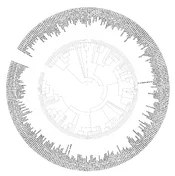
That is so cool.New phylogenetic tree for my 300th flute wood species!
View attachment 290120