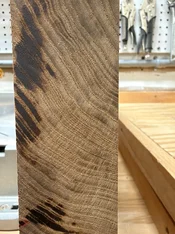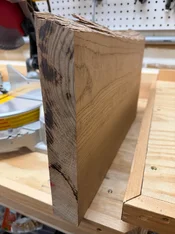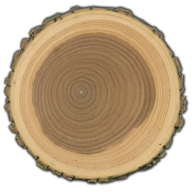
Is this Honey Locust?

Iheartwood

Member
Full Member
Messages
18
Reaction score
39
Location
Eastern PA
First name
Ryan
Hello all-

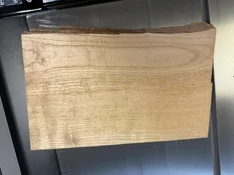
I purchased this from a small, one-man mill nearby in Bucks County, Pennsylvania. I was told it was honey locust and that the sawyer "never sees figured honey locust". Since I had never seen any honey locust, I bought it. Any input would be appreciated. Thanks! IMG_2061.webp
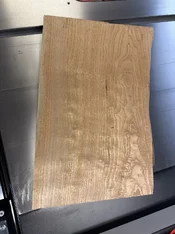
IMG_2062 2.webp IMG_2063.webp IMG_2064.webp
 
Images taken from Hobbithouse

Honey locust, see the banding of pores and the little rays in the end grain? We need to see your end grain cleaned up some more (sanded) to look for these things.
1791367650816.webp

Here is Butternut. See how it lacks that pore banding and the rays are so small you don't see them.

1791367737076.webp

Here is a Chinaberry sample.

1791367886324.webp 1791368270909.webp

Paul did not think Japanese Scholar tree was worth putting on the site. So here is a photo from the Inside Wood web site.

1791368162550.webp

A blacklight will help tell these apart.
 
Last edited:
  • Thread Starter Thread Starter
  • #3
Here are a few images after some sanding and with a bit more zoom. I don't have a black light readily available, sounds like it may be worth it to pick one up. IMG_2065.webp

IMG_2066.webp
 
Here are a few images after some sanding and with a bit more zoom. I don't have a black light readily available, sounds like it may be worth it to pick one up.View attachment 294207

View attachment 294208
These look great. Butternut is now out as a choice. Chinaberry does not have zig-zag banding like your wood. A blacklight can determine for sure if it is in or out. Chinaberry lacks reaction.
 
  • Thread Starter Thread Starter
  • #5
Well, I just purchased the finest blacklight flashlight that $10 can buy off of amazon. Will post back when it comes in this weekend.
 
I'm not the expert here, but that zigzag pattern looks ulmiform to me. Any chance that this is a species of elm?


EDIT: Clearly today I am not the expert in reading prior posts carefully, either. Looks like honey locust can have ulmiform latewood, as the images show. I think I have too much blood in my coffeestream today.
 
Last edited:
Back
Top