• New Woodbarter Hats Are Available!!! Scroll down on the main page to the Member Activities & Site Support, Then click on Wood Barter SCHWAG and go to the topics on hats by Woodtickgreg to order your hat. There's only a limited quanity, so don't wait to get yours.

Most chatoyant wood species?

Mr. Peet

Member
Full Member
Messages
9,261
Reaction score
11,152
Location
northeastern PA
First name
Mark
I disagree. Only the last couple of grits need to be new. All the previous, lower, grits can be old and you'll still get the same result.
I follow your point Paul, going from A to B. You are interested in comparing the two, not the progress between. Think Chuck was also hinting the comparison of all points between to some depth. A gauging of tenacity, resistance, density, and structural influence on results. Too much for me, but someone might try.
 

phinds

Founding Member
Founding Member
In Memoriam
Messages
11,076
Reaction score
22,282
Location
Cortland, NY
First name
Paul
I follow your point Paul, going from A to B. You are interested in comparing the two, not the progress between. Think Chuck was also hinting the comparison of all points between to some depth. A gauging of tenacity, resistance, density, and structural influence on results. Too much for me, but someone might try.
Ah ... right, if you're going to check chatoyancy after every grit, as Paolo did on one sample, then it probably is a good idea to not let any of the grits get worn down much.
 

chatometry

Member
Full Member
Messages
736
Reaction score
1,277
Location
Italy
First name
Paolo
  • Thread Starter Thread Starter
  • #123
Take a look at my purpleheart page for a discussion.
Interesting stuff! When cooking, did you also notice an effect on chatoyance?
cause extensive micro fractures in the wood which are easy to see at 10X.
What grit would this be caused by? Fine, coarse, or both? Thanks for sharing your end-grain sanding sequence (on your website).

I will see if I can have the progressive grit vs chatoyance test repeated with a full set of brand new discs...
 

phinds

Founding Member
Founding Member
In Memoriam
Messages
11,076
Reaction score
22,282
Location
Cortland, NY
First name
Paul
Interesting stuff! When cooking, did you also notice an effect on chatoyance?
I've never paid attention to chatoyancy in purpleheart because I haven't noticed it to HAVE any.
What grit would this be caused by? Fine, coarse, or both? Thanks for sharing your end-grain sanding sequence (on your website).
Happens w/ the fine grit. It's the heat that does it and the fine grits heat up the wood more than the coarse grits. I wouldn't worry about it w/ the face grain though. Now, the carmalization that Mark mentioned might be an issue. That's something I had not even heard of before.
 
Last edited:

chatometry

Member
Full Member
Messages
736
Reaction score
1,277
Location
Italy
First name
Paolo
  • Thread Starter Thread Starter
  • #125
Thank you @phinds.
On some of our purpleheart samples we found some chatoyance; this is the only figured one I could find:
test_00695-gif.gif

It can also caramelize and crystallize depending on heat created.
Is this something easy to detect? Or is it a subtle alteration which requires a dedicated inspection to detect?
 

phinds

Founding Member
Founding Member
In Memoriam
Messages
11,076
Reaction score
22,282
Location
Cortland, NY
First name
Paul
Thank you @phinds.
On some of our purpleheart samples we found some chatoyance; this is the only figured one I could find:
Oh, I wasn't suggesting it never has any, I just haven't ever experienced it that I can recall.
 

Mr. Peet

Member
Full Member
Messages
9,261
Reaction score
11,152
Location
northeastern PA
First name
Mark
Thank you @phinds.
On some of our purpleheart samples we found some chatoyance; this is the only figured one I could find:
View attachment 215501


Is this something easy to detect? Or is it a subtle alteration which requires a dedicated inspection to detect?
Caramelization often is just tagged as 'scorch' or 'burnt' by most wood workers. When it is subtle, it often is overlooked or taken as a hue / color. Happens more often as said, when polishing and working finer grits.
 

chatometry

Member
Full Member
Messages
736
Reaction score
1,277
Location
Italy
First name
Paolo
  • Thread Starter Thread Starter
  • #128
@phinds
@Mr. Peet
@Mike Hill
@Arn213
@2feathers Creative Making

We ran the planned Quartersawn vs Flatsawn test on London Plane, with this sample layout:
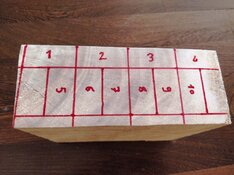
IMG_20210902_181218-1-1024x768.jpg

Quartersawn surface shows the distinctive flecks (medullary rays) which provide contrast making chatoyance much more evident.
From numbers, chatoyance appears to be slightly lower on Rift/Flat surfaces (11.3 on average of 18 measurements) rather than Quartersawn surfaces (12.1 on average of 12 measurements). Below two examples:
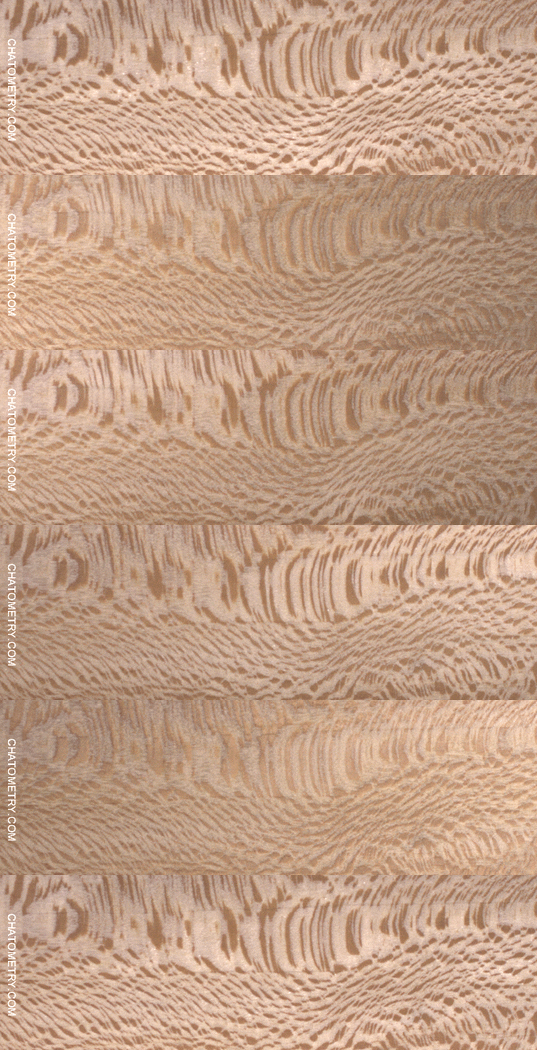
test_01429gif-1.gif
Sample 2 - PZC 12.6

test_01437gif-1.gif
Sample 10 - PZC 10.4

This was further investigated by plotting PZC on the surface.
It appears that the flecks show higher chatoyance than the surrounding areas (PZC ≈ 15-20 vs PZC ≈ 5-15):
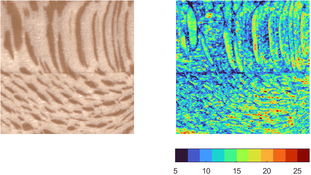
test_01429_point_1-detail-PZC-1.png

...but this only happens when they are cut flat (i.e. QS). When they are cut perpendicularly (i.e. FS) they appear less chatoyant (PZC ≈ 5-10), while the surrounding areas stay roughly the same (PZC ≈ 10-15):
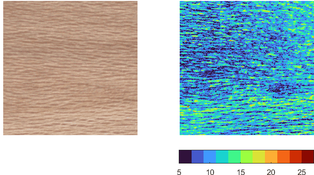
test_01437_point_3-detail-PZC.png
This may possibly explain why the QS surface shows higher PZC.

Interestingly, another set of QS samples from another source shows much higher PZC on main fibers ( ≈ 15-30) rather than medullary rays ( ≈ 10-15):
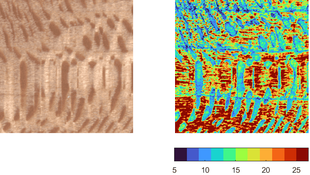
test_01379-gif (1).gif

test_01379_point_1-detail-PZC.png
I'm afraid this posts generates more questions than answers... However I think that the presence of flecks causes additional complexity; we should do the same comparative tests on some wood with chatoyance and without flecks...

 

phinds

Founding Member
Founding Member
In Memoriam
Messages
11,076
Reaction score
22,282
Location
Cortland, NY
First name
Paul
Great post. Thanks. Did you get the veneer yet?
 

chatometry

Member
Full Member
Messages
736
Reaction score
1,277
Location
Italy
First name
Paolo
  • Thread Starter Thread Starter
  • #131
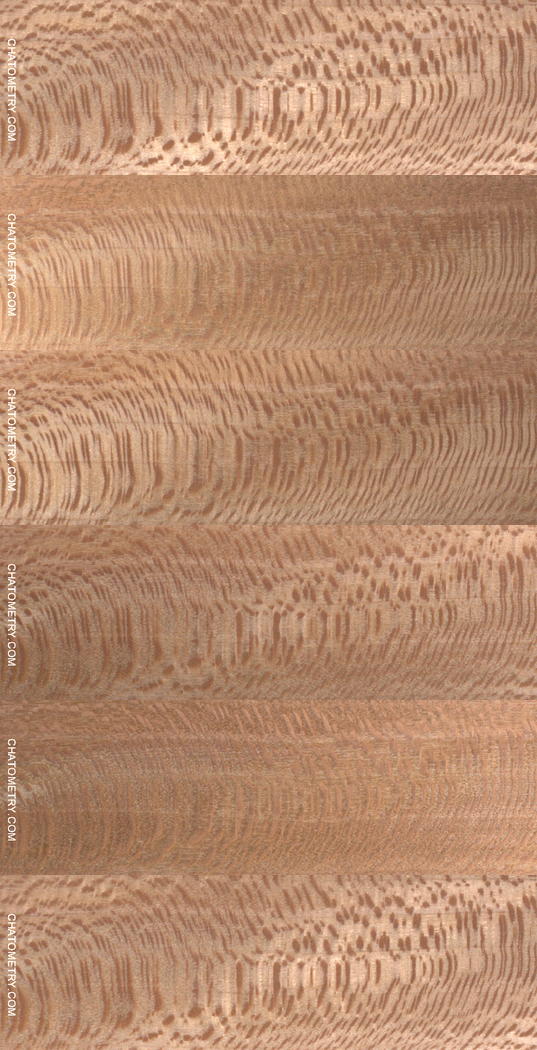
Here's some beauty from Hawaii...

test_01504gif.gif
test_01510gif.gif
test_01513gif.gif
test_01517gif.gif
test_01518gif.gif

With PZC above 24 on average (8 different logs), this is now the most chatoyant of the 57 species we tested so far! (@Arn213 ...)
 
Last edited:

Arn213

craM de la craM # RipJack City!
Full Member
Messages
4,686
Reaction score
9,460
Location
Knickerbocker, NY
First name
Arn
Here's some beauty from Hawaii...

View attachment 216103
View attachment 216104
View attachment 216105
View attachment 216106
View attachment 216107

With PZC above 24 on average (8 different logs), this is now the most chatoyant of the 57 species we tested so far! (@Arn213 ...)
Like I was saying all along going back to post #2 to all you non believers and skeptics thought I was talking smack. :nodice::sarcastic:

Just don’t repeat your findings to the stoopid Islander because he will add that to his arsenal when he preaches that he wants all the “Hawaiian liquid gold” to be brought back in it’s rightful birthplace:wink:. Aloha 🌈
 

chatometry

Member
Full Member
Messages
736
Reaction score
1,277
Location
Italy
First name
Paolo
  • Thread Starter Thread Starter
  • #133
I wanted to share a peculiar example from a few thousands years ago (quartersawn bog oak):

test_01573gif.gif
 

phinds

Founding Member
Founding Member
In Memoriam
Messages
11,076
Reaction score
22,282
Location
Cortland, NY
First name
Paul
reflective or chatoyant quality regardless of wood color, points to cell structure
And this is an interesting demonstration of how hundreds of years (Paolo says thousands and it could be) does not degrade the cell structure in bog oak. I knew that already from end grain analysis but it's still interesting to see another way of confirming that.
 

chatometry

Member
Full Member
Messages
736
Reaction score
1,277
Location
Italy
First name
Paolo
  • Thread Starter Thread Starter
  • #137
To be fair I don't know... I was told 5000-10000 years, but I have no knowledge to confim that. What happens to bog oak? Why does it turn black?
 

phinds

Founding Member
Founding Member
In Memoriam
Messages
11,076
Reaction score
22,282
Location
Cortland, NY
First name
Paul
What happens to bog oak? Why does it turn black?

mineral staining?

Sort of, is my understanding. It's something about the composition of the peat in the peat bogs reacting w/ the tannin in the oak. Sinker logs of oak can be in lakes/rivers for decades or even 100+ years and they don't turn black. I'm stating that based on an old memory from a potentially faulty memory. Oak that sinks in moist areas that are not peat bogs still turn dark but not black like peat bog oak.
 

Arn213

craM de la craM # RipJack City!
Full Member
Messages
4,686
Reaction score
9,460
Location
Knickerbocker, NY
First name
Arn
One species from New Zealand called Ancient Kauri that has been preserved in bogs or swamps also do not turn black. That definitely is a species you want to test as the ones with “white bait pattern” is incredibly radiant and has high chatoyance.

The sinker mahogany salvaged from Belize as well tend to keep their color, but they tend to be heavier, richer in color and more chatoyant by my experience.

Sinker redwood can go either way- they can range from orange heartwood to marbled chocolate to charcoal. I have several billets which one was ocean salvaged that is marbled chocolate and charcoal in color and I have some non figured sinker redwood salvaged from the Elk River in Oregon also has this marbled coloration going on. Photo’s below:

D64C793E-8355-460A-B952-66D11095E3FB.jpeg

2E1775F9-B7FF-4376-921A-8768E4B4D4C3.jpeg

Paolo, it would be interesting if you include sinker salvaged species on your study as to me based on my experience and probably has to do with the naturally curing/preservation under water that there is that extra chatoyance to these species when unearthed and dried properly. When you re-saw it, there is this extra “shimmer/glow” that you see more present compared to non sinker species.
 
Last edited:
Top