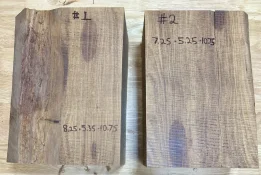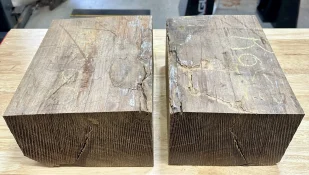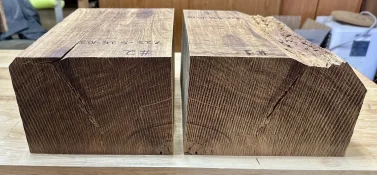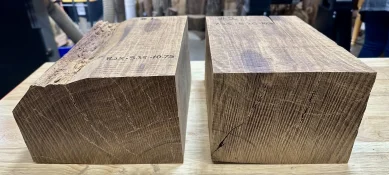
Density should make that assessment for us. Dalbergia tucurensis is about as heavy as ash on average. Most other rosewoods are heavier.Al, Ill take #2
Judging solely by what can be seen in these photos, they could be Yucatan/Panama Rosewood.
DM coming soonDensity should make that assessment for us. Dalbergia tucurensis is about as heavy as ash on average. Most other rosewoods are heavier.
Why? I don’t really want it and the ID should be public anyway. It let’s others chip in.DM coming soon
Replied to wrong postWhy? I don’t really want it and the ID should be public anyway. It lets others chip in.
DM coming soonAl, Ill take #2
Judging solely by what can be seen in these photos, they could be Yucatan/Panama Rosewood.
My block weighs about 16lbs, which translates to 67.5pcf. That's considerably more than the 42pcf stated on wood database for Yucatan/Panama rosewood. So it seems unlikely to be that species.Density should make that assessment for us. Dalbergia tucurensis is about as heavy as ash on average. Most other rosewoods are heavier.
What is the moisture content? Can make a significant difference on weight. ChuckMy block weighs about 16lbs, which translates to 67.5pcf. That's considerably more than the 42pcf stated on wood database for Yucatan/Panama rosewood. So it seems unlikely to be that species.
I understand. I don't know how reliable of a measurement i can get without cutting into the block. I only have the basic $100 pin lignomat meter. That would be a pretty big difference to get to the dry unit weight though, so i still suspect it's likely not Yucatan. Then again, i have goncalo alves with a dry unit weight of like 72pcf lol. So who knows with woodWhat is the moisture content? Can make a significant difference on weight. Chuck
As i suspected, the lignomat reads 6% with is the lowest the meter goes. But that is only with maybe 1/4" pin penetration into this massive blockWhat is the moisture content? Can make a significant difference on weight. Chuck