

I need help identifying this super high figure turning block that i was gifted from the widow of a turner (Cort from Madison WI from my earlier posts)
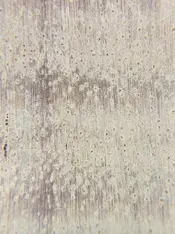
I don't even know where to begin with this. I can't tell if it's a burl or if it's just so highly figured that the grain is all over the place. It looks very familiar, but I don't typically buy wood with this caliber of figure, so i don't have anything comparable in my collection.
The entire block except the one face with some finish on it was sanded from 80g to 600g! The lack of clarity is inherent to the wood itself. It's silky smooth to the touch, despite looking rough cut!
It's reminding me of an Ocotea like imbuia or some other Laurel type species. The hand feel and difficulty in clearing out the grain remind me of an acacia like Koa or even a guibourtia like shedua (pretty sure it's not a guibourtia though).
It appears that the end grain is predominantly on the partially finished face and the face opposing the partially finished face.
Density = 45pcf
Scent = familiar generic hardwood scent. Can't place it. It smells exactly like the other block i just posted about tonight, so don't put much stock in this scent description.
UV fluorescence = none in the wood. Didn't check extractive fluorescence.
THE FIRST PHOTO IS WET
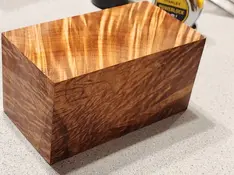
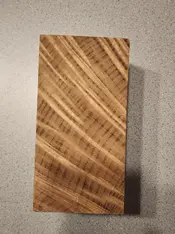
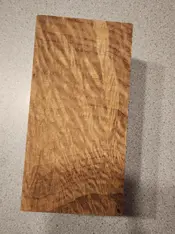
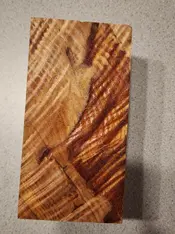
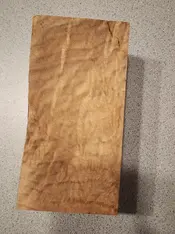
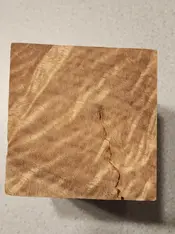
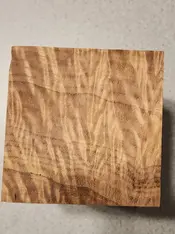
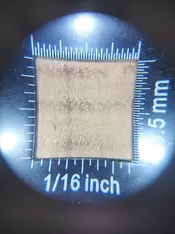
I don't even know where to begin with this. I can't tell if it's a burl or if it's just so highly figured that the grain is all over the place. It looks very familiar, but I don't typically buy wood with this caliber of figure, so i don't have anything comparable in my collection.
The entire block except the one face with some finish on it was sanded from 80g to 600g! The lack of clarity is inherent to the wood itself. It's silky smooth to the touch, despite looking rough cut!
It's reminding me of an Ocotea like imbuia or some other Laurel type species. The hand feel and difficulty in clearing out the grain remind me of an acacia like Koa or even a guibourtia like shedua (pretty sure it's not a guibourtia though).
It appears that the end grain is predominantly on the partially finished face and the face opposing the partially finished face.
Density = 45pcf
Scent = familiar generic hardwood scent. Can't place it. It smells exactly like the other block i just posted about tonight, so don't put much stock in this scent description.
UV fluorescence = none in the wood. Didn't check extractive fluorescence.
THE FIRST PHOTO IS WET
Last edited:


