
UV fluorescence on wood water/ethanol extraction

PPJ

Member
Messages
4
Reaction score
1
Location
Australia
First name
Pengjin
Recently, I was trying to identify Dalbergia species. From many of the sources it mentioned one of the most distinguishable difference from the Dalbergia nigra(Brazilian rosewood) to other Dalbergia species is that the water extraction of Dalbergia nigra is non UV fluorescent compares to other ones which do. I did an experiment myself by soaking several samples of my Dalbergia nigra in DI water and use 365nm UV light to shine on the water extraction. All seems to show a faint blue-greenish UV fluorescence. I found very limited information on the Internet shows what the true non UV fluorescent looks like on the Dalbergia nigra water extraction. I attached pictures of mine with the first one water extraction, second one ethanol extraction. Hope you guys could help. Thanks.
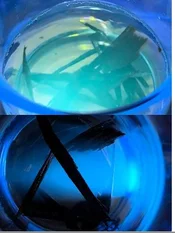
1.webp 2.webp
 
Tricky questions. There are many trees that are ID'ed as "Nigra" in the field and show hints of reaction. So then they look closer to see if it is a soil influence or even a hybrid possibility. The second is more often than not the player at hand. Best of luck finding answers.
 
Recently, I was trying to identify Dalbergia species. From many of the sources it mentioned one of the most distinguishable difference from the Dalbergia nigra(Brazilian rosewood) to other Dalbergia species is that the water extraction of Dalbergia nigra is non UV fluorescent compares to other ones which do. I did an experiment myself by soaking several samples of my Dalbergia nigra in DI water and use 365nm UV light to shine on the water extraction. All seems to show a faint blue-greenish UV fluorescence. I found very limited information on the Internet shows what the true non UV fluorescent looks like on the Dalbergia nigra water extraction. I attached pictures of mine with the first one water extraction, second one ethanol extraction. Hope you guys could help. Thanks.
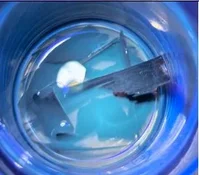
View attachment 293617View attachment 293618
Mark was quicker but I was going to say that they can make hybrids. Dalbergia nigra X spruceana is quite common.
 
  • Thread Starter Thread Starter
  • #4
Mark was quicker but I was going to say that they can make hybrids. Dalbergia nigra X spruceana is quite common.
I see, I didn't consider the possibility of having the hybrids. In this case, would the end grain characteristics be also mixed? Would there be 'purebred' Dalbergia nigra existing these days? I did not even see such description being mentioned as propaganda, haha.
 
I see, I didn't consider the possibility of having the hybrids. In this case, would the end grain characteristics be also mixed? Would there be 'purebred' Dalbergia nigra existing these days? I did not even see such description being mentioned as propaganda, haha.
I don’t know. I got the info from a German wood supplier. He just told me that this was primarily an excuse for people to declare the wood as spruceana and then sell it as nigra. The reason it isn’t propaganda is because d nigra is just more valuable by itself. Can you make a species more valuable by crossing it with a less valuable species? I think not.
 
  • Thread Starter Thread Starter
  • #6
I don’t know. I got the info from a German wood supplier. He just told me that this was primarily an excuse for people to declare the wood as spruceana and then sell it as nigra. The reason it isn’t propaganda is because d nigra is just more valuable by itself. Can you make a species more valuable by crossing it with a less valuable species? I think not.
What I mean is if there is no distinguishable difference between the single species nigra and the hybrid ones, someone could just claim their timber to be the 'real' nigra and sell it for a much higher price. But anyways, all 4 samples that I got from a reputable supplier still show faint UV fluorescence in wood water extraction. Which makes me doubt how many true nigra are out there.
 
What I mean is if there is no distinguishable difference between the single species nigra and the hybrid ones, someone could just claim their timber to be the 'real' nigra and sell it for a much higher price. But anyways, all 4 samples that I got from a reputable supplier still show faint UV fluorescence in wood water extraction. Which makes me doubt how many true nigra are out there.
Here’s a question: what makes “real” dalbergia nigra so valuable?
 
It's a combination of factors: aesthetics, physical properties, used on high-end musical instruments, rarity, you name it.
Which of these properties make it desirable over other woods? Does the hybrid have the properties too? Are these same properties the ones you were looking for in your pieces? If so, why would the accurate distinction matter? Does it sound any different? (The whole tonewood debate is something luthiers can carry out. I’m going to leave it at saying that the actual wood only affects the sound of wind instruments based on porosity and density)
 
I have heard that dalbergia nigra is unique due to an inability to mix with water. However, I've also found research that makes no mention of this whatsoever.

To reinforce what Mark said, UV fluorescence cannot be relied upon as a primary means of identification. There are simply too many variables that impact the response. In addition to soil conditions changing the response, some species have been found to have multiple response spectra depending on the wavelength of the light source.

I don't think I saved the paper, but a few months back i found a study comparing the UV fluorescence of a few common dalbergia species that looked at samples collected in different countries. And the response was inconsistent in several cases. It was really the eye opener for me that UV reactivity has limited practical use. I still look at it, because it can sometimes be used to rule out a species when you're torn between two. And in cases like with locust, the UV response is notoriously bright. So it's one of the easiest ways to differentiate locust him mulberry or similar looking species.

This paper below indicates d. Nigra water extractive is non-reactive but ethanol is blue-green. Again, as stated above this can vary for many reasons. Also keep in mind the color of the light source can inadvertently create a bias in your mind.

Screenshot_20260925_114111_Drive.webp
 
Last edited:
I have heard that dalbergia nigra is unique due to an inability to mix with water. However, I've also found research that makes no mention of this whatsoever.

To reinforce what Mark said, UV fluorescence cannot be relied upon as a primary means of identification. There are simply too many variables that impact the response. In addition to soil conditions changing the response, some species have been found to have multiple response spectra depending on the wavelength of the light source.

I don't think I saved the paper, but a few months back i found a study comparing the UV fluorescence of a few common dalbergia species that looked at samples collected in different countries. And the response was inconsistent in several cases. It was really the eye opener for me that UV reactivity has limited practical use. I still look at it, because it can sometimes be used to rule out a species when you're torn between two. And in cases like with locust, the UV response is notoriously bright. So it's one of the easiest ways to differentiate locust him mulberry or similar looking species.

This paper below indicates d. Nigra water extractive is non-reactive but ethanol is blue-green. Again, as stated above this can vary for many reasons. Also keep in mind the color of the light source can inadvertently create a bias in your mind.

View attachment 293685
That is a very good resource. @ripjack13 do we have a place for things like this?
 
Back
Top