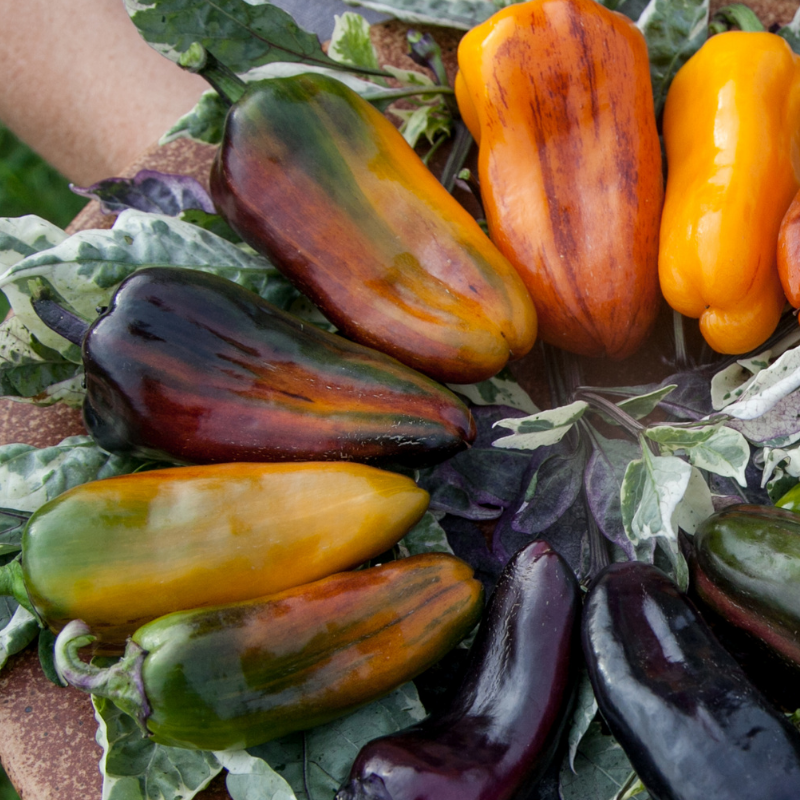
What's Growing in the Garden

I imagine they must smell spectacular... I'm not up on my landscape flowers, what are they?
Horseradish! I love Horseradish. Used to make a droolworthy Horseradish sauce. Unfortunately, Pestilence Farms can kill even Horseradish root. Another thing I look forward to growing once I've escaped this place.
Japanese Chrysanthemums. And unfortunately they smell like mums which is not something one would apply to their pulse points.

I waiting on the Horseradish sauce recipe. hint hint
 
Japanese Chrysanthemums. And unfortunately they smell like mums which is not something one would apply to their pulse points.

I waiting on the Horseradish sauce recipe. hint hint
I think you mis-take me... The only aromatherapy going on around here is that of spent powder wafting up from a warm barrel.

Horseradish Sauce recipe coming up.
 
Some Forellenschuss that came to dinner, I forgot to post. It's another good winter lettuce. Grown entirely in a pot and a pot that really should have been bigger.
"HEIRLOOM This marvelously speckled romaine has roots deep in 18th Century Germany, her name ‘Forellenschluss’ translating to ‘Speckled Like a Trout’"
IMG_5080.JPG


And the Horseradish sauce recipe. The missus directed me to the youtube video where she found it. Fair warning, you may want to have a gas mask at the ready,

 
Last edited:
Keep forgetting to reply to this, regarding the pepper. If it is a mutation, I'm guessing the entire packet of seeds is likely no good..?
I wouldn't throw out the packet. Impossible to know where the mutation occurred. Could be just one or a few seeds from one individual pepper, probably not all seeds. Additionally, the seeds in your packet probably came from a bulk supplier with seeds from dozens or hundreds of individual peppers. You may have just won the lottery and found the one mutated seed from amongst tens of thousands of seeds.
 
Getting cold now, so started digging potatoes. This is from 25 feet of Kennebec spuds. Happy with the size and quality of these. I vine killed these the third week of August and have been storing these in the ground since then.

PXL_20221111_210510469.webp

Size reference, this spud is probably 16 oz or more.

PXL_20221111_210525382.webp

Also grabbed the rest of acorn squash.

PXL_20221111_212206698.webp

And cut a couple stalks of Brussels sprouts.

PXL_20221111_213645026.webp

Will finish getting everything else out of the garden tomorrow.
 
I wouldn't throw out the packet. Impossible to know where the mutation occurred. Could be just one or a few seeds from one individual pepper, probably not all seeds. Additionally, the seeds in your packet probably came from a bulk supplier with seeds from dozens or hundreds of individual peppers. You may have just won the lottery and found the one mutated seed from amongst tens of thousands of seeds.
Didn't come from a bulk supplier, they are kind of an oddball variety, but you're right, it's unlikely all the seeds in the packet are from the same pepper or plant. I'll probably just plan on planting twice as much as I want next spring to be able to cull rejects and still have what I hoped for.

They're somewhat unique plants and peppers. The flowers actually have a deep purple on the tips of each white petal. Very unique peppers also.
 
Curious if anyone can ID these plants. Growing wild in my front yard, in mostly shade on the side the hill. Leaves can range from the size of an adult hand to twice that size. Flowers are roughly an inch or so fully open. The plants stand between 3-4 feet high on somewhat woody stems.

IMG_3335.webp

These pods open first and the purpleish/red flower petals come on later.
IMG_3336.webp

IMG_3336 copy.webp
 
Getting cold now, so started digging potatoes. This is from 25 feet of Kennebec spuds. Happy with the size and quality of these. I vine killed these the third week of August and have been storing these in the ground since then.

View attachment 233649

Size reference, this spud is probably 16 oz or more.

View attachment 233650

Also grabbed the rest of acorn squash.

View attachment 233651

And cut a couple stalks of Brussels sprouts.

View attachment 233652

Will finish getting everything else out of the garden tomorrow.
Nice spuds. Can you elaborate on the "vine kill" part? Just cut all the greens away at some point?

Now I'm craving baked Acorn Squash. I think I like those old wooden crates most of all...

My pumpkins were a dud this year except that I learned a lot and now looking forward to spring. Praying I'll be north by that point and have more sun to work with but if nothing else, I really worked out the kinks as far a feeding the squash and making them produce and that was from seed direct sown that took over a month to even come up. Doing transplants next year should be a big step up, I hope.
But I took what started out as a languishing sickly plant and actually got a LI Cheese Pumpkin to grow for the first time ever (only my second attempt). Went from sparse, all male blossoms to prolific flowing with lots of female flowers... Got the kinks worked out a bit too late in the season and then the weather went sideways very early so the biggest of the two pumpkins I got wasn't a lot bigger than a softball when I cut it from the dead vine, but I consider it a success, just needed another month of warm weather behind it that didn't materialize. I'll just have to wait to brew pumpkin ale from my own pumpkins till next fall.
 
Potatoes are "vine killed" to stop growth of the tubers and allow them to start maturing so they can "set" skin. Takes about two weeks for tubers to harden skin so harvest and handling doesn't cause too much injury. The skin on potatoes acts much as human skin and prevents infection of pathogens, dehydration, etc.

If you are eating them fresh, no problem, but if storing them you want good skin for protection.

Before the chemical revolution, growers would use rollers to crush the vines and cause them to start dying. Organic growers (and other small market growers) still use rollers or even forage choppers to kill vines. Commercially, vine killing is done chemically with non systemic (contact) chemicals that cause rapid dessication.

Vine killing is also used if you are harvesting for a specific market niche such as small "B" sized red potatoes. The potatoes will be killed when a majority of the tubers are still small.

Those crates are what we used at various research farms to harvest and store potatoes. I was told they were all made of wet oak, nailed together and then dried. They are handy, but that crate full of spuds is 60-70#. The research farms have since switched to smaller plastic crates that stack easier, weigh less and are easy to clean and sanitize.
 
Curious if anyone can ID these plants. Growing wild in my front yard, in mostly shade on the side the hill. Leaves can range from the size of an adult hand to twice that size. Flowers are roughly an inch or so fully open. The plants stand between 3-4 feet high on somewhat woody stems.

View attachment 233690

These pods open first and the purpleish/red flower petals come on later.
View attachment 233691

View attachment 233692
Did you compare to the several varieties of Wineberry?
 
Did you compare to the several varieties of Wineberry?
The leaves on the Wineberry aren't quite right, not the ones I've seen anyway. These leaves actually resemble Hydrastis/Goldenseal quite a bit. Have never noticed any berry or other fruit on them either but around here anything that produces something edible gets eaten pretty fast.
 
Last edited:
Another rabbit hole entered. Got my self a new 2 gallon stoneware crock the other day, wife picked up a few more cabbages at the farmer's market yesterday and so I started several pounds of kraut today. Been wanting to do kraut for several years and have enthusiastically done all kinds of other fermenting for years now, including "borrowing" cultures from purchased ferments but just never put the time aside for kraut.
The CSA farm we used to belong to always did barrels of kraut and gave us a bag with our weekly share all fall & winter so wasn't a dire need till this year. I wanted to have more control over the way it was done anyway.
As far as I know, I'm the first Kraut in my family to make my own sourtkraut since my great, great grand-pappy came over from Deutschland. I've the feeling I'll be adding another crock or three in no time.
My folks have been making their own kraut for years. Really simple to make. Best of luck. I am sure you will enjoy.
 
Homemade kraut = good stuff. For fun, get wild and throw other stuff in a small batch - kohlrabi., turnip, beets, carrots, and the like.
 
This summer our boys got to try currants for the first time and liked them. The person who had them is going to take from his bushes so we can transplant some into our yard next year, but in the meantime last night he gave me a couple large containers of currants (mostly white, with a few red mixed in) that he's had in his freezer for us. Last night I cooked them down and ran them through the food mill, then a fine mesh strainer. Tonight I made jelly - got 10 half pint jars. And then I took the remainder and mixed it with apple juice and sugar, and canned that as well, as a syrup for mixing with soda water - got 5 pints of that.
 
Back
Top