What's Growing in the Garden

Just general stunted growth.
We've got some of that too, but totally different environs. Up here, I think we just got too hot before we had root systems to support transpiration.

The other thing we had going on up here is too much fruit set before adequate plant size to support them. Some thinning has helped.
 
Caterpillars! :scare3:

Permethrin...

Alan

everywhere here too!!!!
Pyrethroids such as permethrin, bifenthrin, zeta-cypermethrin, and others will all work, but there has been resistance development to these chemicals because of their widespread use.

Carbaryl is another that is very good for "caterpillar" control. It used to be that if you saw a red bottle with the "Sevin" brand name, it was carbaryl. Not any more. Most "Sevin" bottles on the shelves now contain one of the pyrethroids insecticides mentioned above. If you truly want the "old" Sevin insecticide (carbaryl) you need to read labels and look at other brand names.

Another effective chemical relatively new on the scene is spinosad. It is derived from soil bacteria and is effective on a wide range of insects including beetles, caterpillars, spider mites, flies, ants thrips and more. Unlike some of the conventional insecticides, it is very safe to humans and on some crops, the pre harvest interval is as little as 4 hours. Spinosad controls insects' nervous systems, causing them to stop feeding and die within a couple of days. If you use this chemical be aware of that as you don't see the rapid kill you do with some other insecticides.

One common formulation of spinosad is "Captain Jack's Dead Bug Brew". Fertilome and other brands also sell products with spinodad as the active ingredients.

As always, take your reading glasses with you to the store to read the active ingredient list on bottles as Brand name is almost meaningless these days.
 
I changed the brightness level of this pic so you can see how many Japanese beetles we have attacking fruit trees. This is on my Honey crisp apple. Thousands of them are on nearly everything. Sprayed a bunch this afternoon and will hit more tonight when the wind hopefully dies down a little.

PXL_20240624_191825716~2.webp
 
The number of beetles on the apple is nothing compared to the ones on my Japanese cherry. Some branches are just black with them, and the top two ft of the 20 ft tall tree is already skeletonized after 1 day of feeding. None on the tree Saturday evening, and I was out of town all day yesterday, so couldn't spray.

There are lots of invasive in our world, but for my particular location, none are as damaging as Jap beetles.
Do you normally spray your trees in the dormant season? Chuck
 
No, dormant oil sprays are only used if you have aphids, scales or spider mites, and none of those are a problem in this area at that time of the season.
 
We haven’t had a beetle plague yet… but…. We evidently can’t have too many plagues…. I try to use as little pesticide as possible but when I do I try to get the job done. I use five insecticides around the house. Termidor for fire ants, cut ants and termites. I spray the weep holes around the house with it. A quick shot in a fire ant bed long enough for them to come pouring out is all that’s needed. It will kill the whole colony. I’ll spray it along a line of cut ants and it does the same thing. They can’t taste or smell it so they just groom it off of each other and then they all die in a few days.

I use Onslaught for weep holes and inside the house for whatever kind of bug manages to get in. It dries with a crystalized film (what the bug guy told me) and when a bug walks on it the crystals pop and the bug breathes it into their breathing holes. Dead bug. Works great for scorpions and spiders too.

Permethrin is my general use insecticide for garden pests and borers. For most infestations I will spray late in the afternoon, let it sit overnight and water (sprinkler) the next morning.

Dominion. I handle this stuff like it was radioactive. Pine borers killed two trees before I found this stuff. It’s systemic and kills anything (bugs) that ingest any part of the tree. I use it as a drench inside the drip line and water it in. Then I’m pretty diligent about keeping the grass and flowering plants mowed in that area. Bees and other pollinators will die if they feed on flowers in the treated area. It lasts about a year.

Talstar. Anywhere mosquitos grow Talstar goes.

My go to weed killer is still roundup.

I don’t use Weed and Feed any more. It killed some big patches of St. Augustine this past Spring.

I use a copper based fungicide for the fig trees and a product called Athena for Powdery mildew.

After typing all this I guess they’re going to revoke my Organic Gardening membership….

Funny story… Early in our married life I was working outside and my wife walked out to where I was. She sniffed the air and said, “I love that smell. It reminds me of my grandfathers house”. (Crop dusters had been working on the cotton fields South of the house all morning)… I told her, “Honey, that’s Paraquat… cotton defoliator… pretty much a badass poison…). but, her grandfater lived to be 100 and her grandmother to 98… Maybe they were onto something….


Alan
 
We are using almost the same chemistries for insecticides, I am just using the generics of the brand names you listed.

Fipronil(Termidor)for around the foundation.

Imidicloprid (Dominion) for birch borer and other soil applied systemic activity.

Bifenthrin (Talstar) for general broad spectrum insect control.

Spinosad for broad spectrum control on fruits and veggies.

All of these are only used when bees aren't present.

On fruit trees I use myclobutanil for diseases along with Captan.

I will also use chlorothalonil and azoxystrobin for disease control on veggies.

My herbicide list is long, but is mostly older soil applied chemistries that are used on veggies. Like your paraquat story, I can ID most herbicide and insecticide classes by their smell. By product of years spent conducting research on IPM programs for vegetable crops.

Wish I could go pesticide free, but living in the country with crops on all sides pretty much negates the chance of that if I want anything left for my use.
 
For those that don't have Japanese beetles problems, this is the pest pressure I have. These are feeding in common milkweed blossoms. PXL_20240627_235109553.webp
 
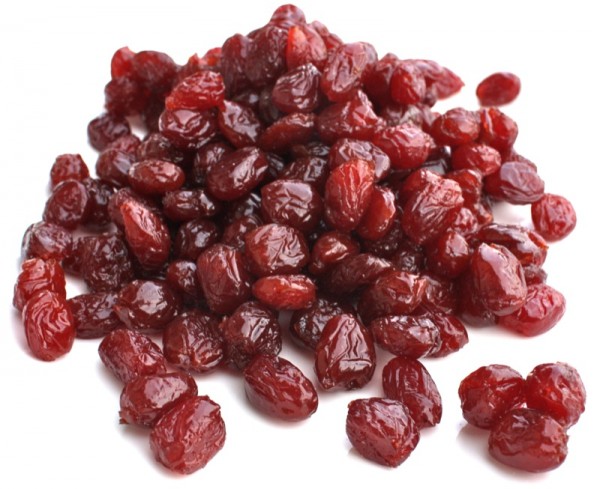
Here are the results of my dried Cherries experiment. As I showed before, 2 quarts soaked in white vinegar for a week in the fridge, drained and then covered in white sugar. Didn't measure, but used somewhere between 3-4 cups of sugar, enough to cover them. Back to fridge for a week- stirring once a day to help dissolve the sugar. Drain and put in the dehydrator for 36 hours @135°. They were probably as dry as they were going to get after 18 or so hours, but left them in to make sure they dried.

Sticky as all get out to handle, but man are they delicious! Will definitely be doing more of these. Very similar to craisins in texture but these are more sticky. Chewy, but not stick in your molars sticky either. Although these would be shelf stable in a vac pack, plan on vac sealing and freezing these. Will use on charcuterie trays and baking. Yield was about three cups of dried cherries from 2 quarts pitted. Plus, about 3 cups of cherry vinegar and 2-3 cups of cherry syrup.

The original recipe called for just air drying these for a day on parchment paper then freezing, but I think it is worth while drying them which concentrates the flavor.

If anyone picks or buys sour cherries, this recipe is a must. Takes very little time, other than waiting, and the result is spectacular. Plus the by product of flavored syrup and vinegar means that nothing is wasted.

PXL_20240630_062726136.jpg

Edit, I posted the page with the recipe earlier, but here it is again for anyone interested:
 
Last edited:
Purple hull peas. We shelled about half of them this afternoon. A lot of work for a little bit of return, … but,… a skillet of cornbread and a slice of ham will make it all worthwhile! Looking at this picture reminds me that I need to fill up the ice cream freezer with water tomorrow and let it swell up so it won’t leak...

Alan


IMG_1520.webp
 
Electric fences

I've got pecans on my trees this year again. Took along time for the trees to produce and last years crop went to the squirrels. I was going to buy a 2 mile one at the local farm store, then I looked on Amazon. Some 8 and 10 mile ones for the same price. Any brands to stay away from?

And the electric netting recommended and on Amazon are really expensive. Can you hang a layer of chicken wire on the bottom branches of the tree and then energize it by running a strand of electric fence wire throughout it?
 
I think the one I have is a "Zareba" brand. If I recall correctly, it was something like a 2 mile charger. Had it for probably 10 years and it has withstood a lot of abuse, including it getting soaked internally. Dried it out and it works fine.

The only way you can hang it from the tree is if you can find insulators that you can attach to the tree.

Never used the netting, just used multiple strands of wire against coons and deer.

Do you have a farm store nearby? Tractor supply, Rural King, or similar? If so go to one of them for fencing supplies.

Never tried it, but I think you could use chicken wire in a ring around the trees, but use 3-4 electric fence posts and insulators to support it. The insulators aren't meant for that, but you could easily use some bare baling wire to attach the ring of chicken wire to the insulators. Recommend using three insulators per post. Use the metal (rebar) posts, and stay away from the fiberglass posts, can drive the metal posts easily with a large hammer. You would also need to spray around the base to keep any weeds from growing up and touching the net.

Wish I could get a charger like we used to have when I was a kid. It was a pulse charger and would fry any weed that touched it. Remember laying a green corn stalk against it, and after a little bit of time, ate through the stalk. Probably not legal these days to use something like that, but my guess is it might be able to kill squirrels. Everything today seems to be pet/small animal safe, although I do find a few dead birds every year.
So I guess you're saying I can't just wire the netting (chicken wire) to the bottom branches. Trying to protect against jumping squirrels. Trunk will be protected by 3' sections of ductwork.

If I do fence in the whole tree wide enough so they can't enter the perimeter of the trees? I have three trees to protect.
 
Last edited:
Back
Top