
I played around with bee keeping for a few years. They are pretty easy to capture when they swarm. A old now departed friend used to put a little classified ad in the local paper. I've lost my bees if you find them call. Occasionally someone would find a swarm and call him, he got quite a few colonies like that.I found this “growing” on my crabapple tree in the front flower garden Friday morning.
View attachment 272208

You are using an out of date browser. It may not display this or other websites correctly.
You should upgrade or use an alternative browser.
You should upgrade or use an alternative browser.
What's Growing in the Garden
- Thread starter trc65
- Start date

I got into beekeeping after the decline in bee population. Only saw 3 swarms in the 5 years I had bees. Two swarms were inaccessible. The only one that was, I could not coax into their new box. Went home to get another box, thinking there might be something keeping them from going in. By the time I got back - they were gone. A few were still buzzing around, but did not have a bee-finding box to triangulate with, but probably would not work, as they didn't have a home and they probably did not know where they had gone either. That ad was a pretty good idea!!
What worked best for me was to lay a sheet on the ground directly under the swarm with a bottom board and super on it. Then brush them into the box, the queen will probably be in the center of the mess if you get her the rest will probably follow. When things settle down a little the bees that landed on the sheet can be poured in. They are all loaded with honey that they robbed from the old hive and they are pretty docile, a few puffs of smoke also helps.
I kept bees until the day I swelled up like a watermelon after a few stings… never bothered me for years and then one it did… I used to put on new supers right before the guajillo flow and pull them right after… prettiest, mild, honey I ever had…
We have precious few honeybees working our gardens here. Mostly Bumble bees, wild bees and wasps do out pollenating.
Alan
We have precious few honeybees working our gardens here. Mostly Bumble bees, wild bees and wasps do out pollenating.
Alan
We are lucky because bee keeping is pretty popular around here, we have 3 small apiary's close by. Sometimes I plant buckwheat as a cover crop in late summer, the bees love it, I often wonder if my neighbors notice the dark buckwheat honey.I kept bees until the day I swelled up like a watermelon after a few stings… never bothered me for years and then one it did… I used to put on new supers right before the guajillo flow and pull them right after… prettiest, mild, honey I ever had…
We have precious few honeybees working our gardens here. Mostly Bumble bees, wild bees and wasps do out pollenating.
Alan
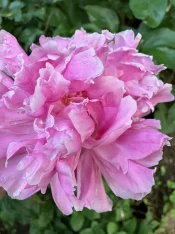
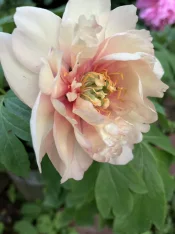
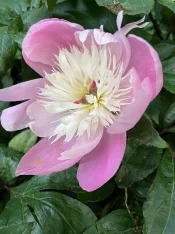
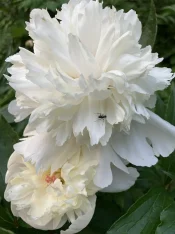
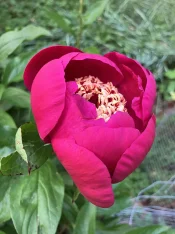
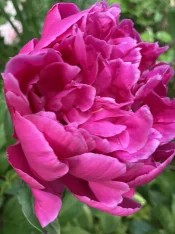
I love it when my Peonies are in bloom!

I did similar when I boxed this one. I scooped as many in to the box as I could. The sheet makes a nice surface for any who fall to walk to the box. Luckily I had the queen in the initial scoop of bees and within an hour all of them were in the box. What made it easy is they were at head height, not 40 feet in a tree.What worked best for me was to lay a sheet on the ground directly under the swarm with a bottom board and super on it. Then brush them into the box, the queen will probably be in the center of the mess if you get her the rest will probably follow. When things settle down a little the bees that landed on the sheet can be poured in. They are all loaded with honey that they robbed from the old hive and they are pretty docile, a few puffs of smoke also helps.
I had a similar reaction. Got stung regularly with no problems then took one to the eyelid and my whole face swelled up. Stopped for two years but did the allergy injections.I kept bees until the day I swelled up like a watermelon after a few stings… never bothered me for years and then one it did… I used to put on new supers right before the guajillo flow and pull them right after… prettiest, mild, honey I ever had…
We have precious few honeybees working our gardens here. Mostly Bumble bees, wild bees and wasps do out pollenating.
Alan
Just started keeping bees last year but I try to be more careful, and have my EpiPen now.
That's similar to what happened to me. Had hives for 5 years and then one day while cutting the grass one got me on the forehead and one on the cheek. Almost immediately noticed the symptons, swelling, swelling of tongue, itching of the palms and immediately went into the house and took some Benadryl that I kept around for just such a circumstance. Fortunately that helped, but it scared me and I gave my bees and equipment to one of our superintendents that live out in the country. My two favorite times to harvest were the years we had a really good locust bloom - really a light colored honey (almost white) that had great flavor. The other time was after the fall wildflowers (mainly asters). Had to wait a little for it to "cure" before harvesting. It would have a terrible smell until then. But it was a thick dark, strong flavored honey that tended to granulate. And I like granulated honey - less messy, no drips!

We have lavender bushes lining one whole side of our driveway and once the blooms appear, they're full of honey bees. I don't know where the nest is but I bet it's a big one. And lavender honey is nice.That's similar to what happened to me. Had hives for 5 years and then one day while cutting the grass one got me on the forehead and one on the cheek. Almost immediately noticed the symptons, swelling, swelling of tongue, itching of the palms and immediately went into the house and took some Benadryl that I kept around for just such a circumstance. Fortunately that helped, but it scared me and I gave my bees and equipment to one of our superintendents that live out in the country. My two favorite times to harvest were the years we had a really good locust bloom - really a light colored honey (almost white) that had great flavor. The other time was after the fall wildflowers (mainly asters). Had to wait a little for it to "cure" before harvesting. It would have a terrible smell until then. But it was a thick dark, strong flavored honey that tended to granulate. And I like granulated honey - less messy, no drips!

A few years back we visited a Lavender farm where the bees were fully enthralled with the flowers. Our guide told us the bees become nearly drunk on the flowers, which made them very docile. That is probably true with some other flowering plants, as well. Comforting to know for folks that are allergic to bee stings, which I am not. ChuckWe have lavender bushes lining one whole side of our driveway and once the blooms appear, they're full of honey bees. I don't know where the nest is but I bet it's a big one. And lavender honey is nice.
Normally when there’s a flow the bees are busy working… Same when they are at water. Really the only time they get feisty is when they feel the hive is threatened.
Alan
Alan
I tried to separate one of those plant containers I mentioned earlier. The two squash plants were 6" - 10" tall so I thought it was time. Surprisingly there was little root development and the two fell apart. I replanted the two back together and reconsidered my idea to separate all my double plants. I'll plant them as is and next year only put one seed per container.
I'll hold off another month before planting in the garden. I'll leave them outside on the porch though. I've never fertilized any of my starts. Should I be using an indoor fertilizer (Miracle Gro) to get better roots?
I'll hold off another month before planting in the garden. I'll leave them outside on the porch though. I've never fertilized any of my starts. Should I be using an indoor fertilizer (Miracle Gro) to get better roots?
I have used a little miracle grow in my water when I started plants. But that was several years back. Never seemed to have much trouble with root growth. I was helping a friend who had a small greenhouse operation.

- Thread Starter Thread Starter
- #2,255
I fertilize all my transplants starting about the time the first true leaves have fully expanded. I water them with a fertilizer mix once every couple weeks. I use about a 1/4 strength solution of a balanced, water soluble, "blue" fertilizer. About 1/2 - 1 tsp per gallon of water.I tried to separate one of those plant containers I mentioned earlier. The two squash plants were 6" - 10" tall so I thought it was time. Surprisingly there was little root development and the two fell apart. I replanted the two back together and reconsidered my idea to separate all my double plants. I'll plant them as is and next year only put one seed per container.
I'll hold off another month before planting in the garden. I'll leave them outside on the porch though. I've never fertilized any of my starts. Should I be using an indoor fertilizer (Miracle Gro) to get better roots?
However, I use a potting mix that has no fertilizer in it. If you use one of the bag mixes that has some fertilizer, there is no need for any additional.
Also, when transplanting, I use a full strength mix (1-1.5 TBS/gallon) to water in the plants.
No special potting mix, just my topsoil/compost mix I use for everything else. So I guess I'll fertilize every other week the plants on my porch at the reduced amount for another month or so and then plant. Thanks
- Thread Starter Thread Starter
- #2,257
The compost is probably supplying some nutrients, but fertilizing with the reduced rate water soluble can't hurt.
Long ago at the Texas A&I School of Agriculture, a professor told me that the most important thing for any flowering plant was that upon germination, that the first thing the little root encountered was a soil colloid with ample absorbable Phosphors. He said at that point every flower that the plant would ever produce was assured…
Alan
Alan
Flower Bed
Too wet to work on the garden, so I thought I'd concentrate on cleaning up the front flowerbed. Really just a rock garden with a few things planted throughout. A few sections of jonquils are planted inside 8" dia. pipe that were buried. The whole bed has weed barrier on it topped with FRESH wood chips. The wood chips are removed and replaced every two years because they turn into compost which the weeds love.
How crowded do you let your bulbs get? Is it time to dig up (Fall??) and separate?
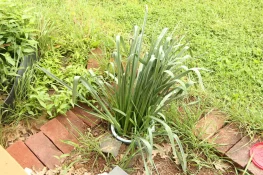
The other end of the bed has more jonquils and one of Mom's rose bushes that I dug up before the house sold. Dad's favorite. I see it's time to spay Diazinon because the bugs are getting to it. Too wet on a regular basis to do so.
In past years, I had container strawberries resting in this bed. Now I have many nice plants that spilled over and became rooted in the shallow compost. I'd like to save them and transplant (Fall??) elsewhere. Plus, I have about a dozen runners that I thought I would root them in 5" pots, let grow this Summer and then transplant them later, too.
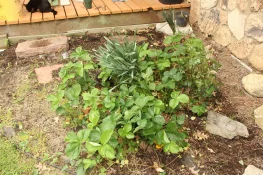
Too wet to work on the garden, so I thought I'd concentrate on cleaning up the front flowerbed. Really just a rock garden with a few things planted throughout. A few sections of jonquils are planted inside 8" dia. pipe that were buried. The whole bed has weed barrier on it topped with FRESH wood chips. The wood chips are removed and replaced every two years because they turn into compost which the weeds love.
How crowded do you let your bulbs get? Is it time to dig up (Fall??) and separate?
The other end of the bed has more jonquils and one of Mom's rose bushes that I dug up before the house sold. Dad's favorite. I see it's time to spay Diazinon because the bugs are getting to it. Too wet on a regular basis to do so.
In past years, I had container strawberries resting in this bed. Now I have many nice plants that spilled over and became rooted in the shallow compost. I'd like to save them and transplant (Fall??) elsewhere. Plus, I have about a dozen runners that I thought I would root them in 5" pots, let grow this Summer and then transplant them later, too.
- Thread Starter Thread Starter
- #2,260
I'd wait until fall for the jonquil, but yes, they look like they are getting a little crowded.
What I would do on the strawberries is treat them like you are renovating a bed.
After fruiting is done, clip off all the leaves leaving an inch or two of stem, dig them up and transplant. Fertilize with around 50-60#/acre actual N and keep them well watered. They will start growing, sending out tillers and give you a good crop next spring.
When I renovate my bed, I cut off all the tops, then run the tiller down each side of the bed, leaving about 12" wide in the center, fertilize and give it plenty of water. Tilling thins it out a little, and loosens up the dirt so runners can root easily.