
When the kids were all at home I used to plant and store quite a few potatoes. One year I had a lot more than we could use before they got soft and sprouted in April. I picked out a couple bushel of the best ones, put them in milk creats and buried them a couple of feet deep. I put a piece of plywood over the creats and mulched the area well after I filled the hole. I dug them up in the spring and they looked pretty much like they did when I burried them. They did sprout quite fast after I dug them but they lasted until the baby potatoes were ready in July. I've done it a few times since with similar results, I expect if there was one bad potato in the lot that they would all rot.The first I think is Japanese hops. The second weed is giant ragweed.
Very nice looking berries.
If the potatoes continue to dry up, nothing to do for them. However, doesn't mean you have to dig them. They will store in the ground just fine, and dig a few when you need them. My Norlands will die off in a few weeks and they stay in the ground until I want to eat a few. Other than some potential rodent eating a little, they will be fine until the ground freezes.

You are using an out of date browser. It may not display this or other websites correctly.
You should upgrade or use an alternative browser.
You should upgrade or use an alternative browser.
What's Growing in the Garden
- Thread starter trc65
- Start date
There's several, a couple of fingerling types, Yukon gold, russet, and purple viking.Go rub it in lol. Seriously, nice. What variety?

- Thread Starter Thread Starter
- #3,243
Good way to store them.When the kids were all at home I used to plant and store quite a few potatoes. One year I had a lot more than we could use before they got soft and sprouted in April. I picked out a couple bushel of the best ones, put them in milk creats and buried them a couple of feet deep. I put a piece of plywood over the creats and mulched the area well after I filled the hole. I dug them up in the spring and they looked pretty much like they did when I burried them. They did sprout quite fast after I dug them but they lasted until the baby potatoes were ready in July. I've done it a few times since with similar results, I expect if there was one bad potato in the lot that they would all rot.
About the one bad potato... An extra benefit to leaving them in the ground is any tubers that are infected, will rot and dry up in the ground before you dig them for storage. Additionally, the skins of the potato will naturally "harden off" and they will store better and resist pathogens better.
Yup I wait quite a while to dig mine, usually after we have had a frost in September. Wait for a nice sunny day dig them in the early morning and let the sun dry them out until afternoon.Good way to store them.
About the one bad potato... An extra benefit to leaving them in the ground is any tubers that are infected, will rot and dry up in the ground before you dig them for storage. Additionally, the skins of the potato will naturally "harden off" and they will store better and resist pathogens better.
- Thread Starter Thread Starter
- #3,245
Just a couple minutes ago, heard a noise outside my bedroom window, got a flashlight out and spotted a fat coon scampering down one of our juniper bushes. It had pulled all 4 of the decorative cups off the hummingbird feeder and sucked it dry. Assuming the same one has been digging up flower pots and digging holes around the house.Woke up to find my feeder had been vandalized. I had the feeder hanging on the shepherds hook but the racoon climb the trellis and knock it down. Chewed right into it this time. They come right up on my porch if I forget to bring the cat food in at night.
View attachment 290337View attachment 290338
Time to set a trap for them after dark and apply some lead when they show up.
The mulberry and raspberries are done, but they've been eating the wild black cherries (could see the pits in a big black pile that was left in the middle of the deck). Probably having a hard time finding "good" meals as the corn is just now starting to tassel and won't be ears to raid for a couple weeks.
They've also started digging up the floor in the shed.
I usually just let them be, but when they start getting too familiar and causing damage it's time to act.
While I was typing this they came back.


Goes to show you how brazen they are. Shining a light at them from 3 ft away didn't scare them, only left when I opened the window and yelled at them.
Last edited:
Brother and I have trail cameras around the yard to watch the deer and we see racoons, half a dozen, all the time. I've got one feeder left that I take down every night an put in a bucket on the porch. Weigh the lid down, too.Just a couple minutes ago, heard a noise outside my bedroom window, got a flashlight out and spotted a fat coon scampering down one of our juniper bushes. It had pulled all 4 of the decorative cups off the hummingbird feeder and sucked it dry. Assuming the same one has been digging up flower pots and digging holes around the house.
The mulberry and raspberries are done, but they've been eating the wild black cherries (could see the pits in a big black pile that was left in the middle of the deck). Probably having a hard time finding "good" meals as the corn is just now starting to tassel and won't be ears to raid for a couple weeks.
They've also started digging up the floor in the shed.
I usually just let them be, but when they start getting too familiar and causing damage it's time to act.
While I was typing this they came back.
View attachment 290839
View attachment 290840
View attachment 290841View attachment 290842
Goes to show you how brazen they are. Shining a light at them from 3 ft away didn't scare them, only left when I opened the window and yelled at them.
Suspiciously, one of the racoons caught lead poisoning the other morning
 .

Well Tim, I'd say time to make raccoon stew or one of your famous holiday meat rolls and snack sticks.

Cool photos Tim. Raccoons sure can be destructive little devils and too clever for their own good. We had june beetle larva in our lawn in St Louis and one day I noticed a pretty wide section chewed up, looked like pigs had got on it. Turned out to be raccoons digging for the larva. Spraying to get rid of the larva solved the raccoon problem.
Our spotted ground squirrels have had their litters. Yesterday I counted 7 of them under the bird feeder. I don't mind them much but they are diggers and if they start digging holes around the house or anything I'll get a trap. The owls and hawks aren't doing their jobs.
Our spotted ground squirrels have had their litters. Yesterday I counted 7 of them under the bird feeder. I don't mind them much but they are diggers and if they start digging holes around the house or anything I'll get a trap. The owls and hawks aren't doing their jobs.
Last edited:

You are far too tolerant of theft and vandalism my friend.I usually just let them be
I just picked another bucket (3 Qts?) of thornless blackberries. I wish the front side yielded as much as the back. The row runs N-S and the front side gets full sun after 9-10A. I got it pretty cleaned up before the fruit started to bear, but only produces about a third of what the back does. It was choked full of those weeds I posted about.

Is there a morel to this story? Should I let the front get full of weeds too lol? Seriously, I have a roll of black netting. Would it be to my advantage to make a shade screen to protect the vines from overhead sun? That question also applies to my Alderman peas. Could I shade them to keep them from burning up. Or would black netting just draw more heat? Naturally I keep both well watered and mulched.
In the foreground of the picture is a cheap $3 cherry pitter I picked up at WM. I did find the NorPro one at Rural King, but after reading the reviews, it may go back. Seems the plastic breaks easily and there are jams and requires a lot more manual action than there's suppose to be. I'll try the cheapie first. If it doesn't work, then I'll switch to the other.
Plus I don't like being stuck in the house to pit the cherries. I do a lot of garden work out under the shade tree while listening to the game like my Mom and Dad use to do.
- Thread Starter Thread Starter
- #3,251
That has just changed. The line has been crossed.You are far too tolerant of theft and vandalism my friend.
- Thread Starter Thread Starter
- #3,252
Since they have a taste now for sugar water, that will be the bait to try and keep from catching cats.
Just picked up a new feeder that will be taken down at night for now. Will use the one they trashed with a splash of sugar water in it to get them close, when they don't get much, will hopefully go in the trap.
This is what they did to the feeder.


Just picked up a new feeder that will be taken down at night for now. Will use the one they trashed with a splash of sugar water in it to get them close, when they don't get much, will hopefully go in the trap.
This is what they did to the feeder.


Go get ‘em!Since they have a taste now for sugar water, that will be the bait to try and keep from catching cats.
Just picked up a new feeder that will be taken down at night for now. Will use the one they trashed with a splash of sugar water in it to get them close, when they don't get much, will hopefully go in the trap.
This is what they did to the feeder.
View attachment 290848
View attachment 290849

Last edited:
Well, my elephant garlic started dying off so I harvested it. I mean to move it next season.
This season, it was under the drip of the house which didn't hurt but some years that isn't so great a place...
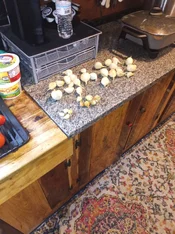 these are the cloves that seem size to eat.
 these are the hard shelled corms that I plan to plant in October. This came from 5 decent plants and 1 puny plant. I have replanted the bulbils or seed from the scapes under the drip to see if they come up. If they do, I am going to be over run with garlic. 6 scapes probably produce 4 to 6 hundred bulbils.
Next year, I intend to start some walking onions and start looking for a chive that comes back.
The other thing I am curious about is Jerusalem artichokes/sunchokes.
Anyone have them? My wife is diabetic and I know the fiber in them is purported to be good for mediating sugar uptake. I also know that fiber has other less desirable side effects if consumed in quantity.
This season, it was under the drip of the house which didn't hurt but some years that isn't so great a place...
 these are the cloves that seem size to eat.
 these are the hard shelled corms that I plan to plant in October. This came from 5 decent plants and 1 puny plant. I have replanted the bulbils or seed from the scapes under the drip to see if they come up. If they do, I am going to be over run with garlic. 6 scapes probably produce 4 to 6 hundred bulbils.
Next year, I intend to start some walking onions and start looking for a chive that comes back.
The other thing I am curious about is Jerusalem artichokes/sunchokes.
Anyone have them? My wife is diabetic and I know the fiber in them is purported to be good for mediating sugar uptake. I also know that fiber has other less desirable side effects if consumed in quantity.
Good idea, thanks. Cats are usually in bed with me around 10P lol. I bring them all in at night to keep them safe from the fox and coyotes.Since they have a taste now for sugar water, that will be the bait to try and keep from catching cats.
Just picked up a new feeder that will be taken down at night for now. Will use the one they trashed with a splash of sugar water in it to get them close, when they don't get much, will hopefully go in the trap.
This is what they did to the feeder.
View attachment 290848
View attachment 290849
Last edited:
A man after my own heart. I trap and then send them to raccoon nirvana by means of a small metal pellet traveling at approximately the speed of sound. Buzzards think they are fine cuisine.That has just changed. The line has been crossed.
- Thread Starter Thread Starter
- #3,257
I've never grown Jerusalem artichokes, but the one thing I know is they are hardy and will spread.Well, my elephant garlic started dying off so I harvested it. I mean to move it next season.
This season, it was under the drip of the house which didn't hurt but some years that isn't so great a place...
View attachment 290858these are the cloves that seem size to eat. View attachment 290857these are the hard shelled corms that I plan to plant in October. This came from 5 decent plants and 1 puny plant. I have replanted the bulbils or seed from the scapes under the drip to see if they come up. If they do, I am going to be over run with garlic. 6 scapes probably produce 4 to 6 hundred bulbils.
Next year, I intend to start some walking onions and start looking for a chive that comes back.
The other thing I am curious about is Jerusalem artichokes/sunchokes.
Anyone have them? My wife is diabetic and I know the fiber in them is purported to be good for mediating sugar uptake. I also know that fiber has other less desirable side effects if consumed in quantity.
Many years ago, the potato and processed vegetable market was real crappy in Wisconsin and a guy got the idea to import and promote J. artichokes as an alternative crop. Got all kinds of good press, and the guy was a real promoter. His argument was that since they are a tuber the potato growers could use the same equipment to handle them.
Several hundred acres were planted, the Central Sands area was beautiful from the blossoms, and then came time for harvest.
The "chains" on potato harvesters are spaced to allow undersize tubers, rocks and other plant material to pass through. J. artichoke tubers are not round (or oblong) and fat, but rather slim, kind of like fingerling potatoes. At harvest, nobody had a harvester set up for slim fingerlings and a majority of the artichokes were left on the ground. Most were never harvested, and to this day, you can find many J artichokes growing as weeds in the corners of pivots, and in ditches.
Now, none of that helps you with growing them, but if you do, know they will spread, but you'll have lots of pretty yellow blossoms.
- Thread Starter Thread Starter
- #3,258
That used to be my thought with black raspberries also. The best ones were always in full shade on the backside of the rows.I just picked another bucket (3 Qts?) of thornless blackberries. I wish the front side yielded as much as the back. The row runs N-S and the front side gets full sun after 9-10A. I got it pretty cleaned up before the fruit started to bear, but only produces about a third of what the back does. It was choked full of those weeds I posted about.
View attachment 290847
Is there a morel to this story? Should I let the front get full of weeds too lol? Seriously, I have a roll of black netting. Would it be to my advantage to make a shade screen to protect the vines from overhead sun? That question also applies to my Alderman peas. Could I shade them to keep them from burning up. Or would black netting just draw more heat? Naturally I keep both well watered and mulched.
In the foreground of the picture is a cheap $3 cherry pitter I picked up at WM. I did find the NorPro one at Rural King, but after reading the reviews, it may go back. Seems the plastic breaks easily and there are jams and requires a lot more manual action than there's suppose to be. I'll try the cheapie first. If it doesn't work, then I'll switch to the other.
Plus I don't like being stuck in the house to pit the cherries. I do a lot of garden work out under the shade tree while listening to the game like my Mom and Dad use to do.
All that changed when I planted a new patch last year. They were planted in full sun and similar to yours, get that after about 9:00 a.m.
The size and production is great on the full sun patch. However, I've also kept them weeded, fertilized and watered along with bark mulch to help with water and weeds.
My theory of what was happening with my b raspberries and your blackberries is that even with watering and fertilizer, the weeds were taking enough out of the soil that the berries were stressed. The plants were probably not getting enough water or nutrients for a good crop. Those in the full sun were drying out and small berries resulted. On the shady side, the stress is alleviated to a degree by the shade and the berries were bigger. I see the same thing with the wild berries.
All the wild ones have an incredible amount of competition from other plants, but in the shade the berries are always bigger.
I think if you can get the weeds cleaned up and some mulch around the plants to help retain water and prevent weeds, you will start seeing an incredible crop of berries.
There are studies that show that even 4-6" tall weeds can reduce yields in many crops that are much taller. Getting weeds under control early is important.
Having said all that, I know the reality of the situation, and that is why I went with a thick layer of bark mulch to help. Otherwise, there just aren't enough hours in a day, and you can only do so much.
I had gathered that the spread was to be expected. I will try to contain in a raised bed for now. Same as my elephant garlic and walking onions. I need to move some of my herbs into raised beds as well. Much easier to contain the little buggers.I've never grown Jerusalem artichokes, but the one thing I know is they are hardy and will spread.
Many years ago, the potato and processed vegetable market was real crappy in Wisconsin and a guy got the idea to import and promote J. artichokes as an alternative crop. Got all kinds of good press, and the guy was a real promoter. His argument was that since they are a tuber the potato growers could use the same equipment to handle them.
Several hundred acres were planted, the Central Sands area was beautiful from the blossoms, and then came time for harvest.
The "chains" on potato harvesters are spaced to allow undersize tubers, rocks and other plant material to pass through. J. artichoke tubers are not round (or oblong) and fat, but rather slim, kind of like fingerling potatoes. At harvest, nobody had a harvester set up for slim fingerlings and a majority of the artichokes were left on the ground. Most were never harvested, and to this day, you can find many J artichokes growing as weeds in the corners of pivots, and in ditches.
Now, none of that helps you with growing them, but if you do, know they will spread, but you'll have lots of pretty yellow blossoms.
My chocolate mint spread from a single clump to a 20 x 20 area in 4 years even with mowing the perimeter. It's just short chocolate mint. Still there. Pops up and seeds out at any untrimmed area, fence line, rose bush (yeah, the wife doesn't particularly lie that one...), etc
I did know they were much smaller than potatoes but at least they are larger than sedge nuts... Looked into that as a perennial crop and said , y'all crazy!

Do deer bother your herb garden?