What's Growing in the Garden

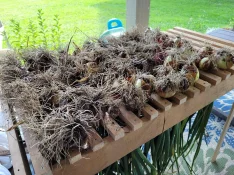
Today was a busy day in the garden and kitchen. Picked more beans - 2 gallon bucket filled - got them cut up, blanched, and frozen. Some more freezer corn. Picked some shishito, poblano, and cubanelle peppers - roasted them on the grill, cut them up, and froze them in portions for adding into dishes through the winter. Garlic, shallots, and one of the varieties of onions we planted were ready to be harvested, so pulled all those. In anticipation I took about 30ish minutes the other night and, using some old pine boards that I had laying around, I built a drying rack. The onions and shallots that were too small to try to cure and store I cut up and have in the dehydrator now. Pulled most of the carrots too. Some of them could've used more time in the ground, but they were too close together - I wasn't as aggressive as I should have been in thinning out the carrots, onions, and shallots.
299775507_10101961293415919_8289893993784301254_n.webp

After all that (plus some other work around the house), I planted a handful of different seeds - hopefully with enough time left to get a fall harvest. Really wanted to get these seeds in the ground a couple weeks ago, but I have been short on time and I had to wait until I could harvest some things and pull some plants to have the space.

Tomorrow afternoon I need to pull all the green onions. Those I'll cut into small pieces and freeze - two half gallon mason jars full of green onions in our freezer does us well for a year, until we can harvest them again. Whatever doesn't fit in the jars I'll dehydrate. Got some cucumbers we picked and can probably get a couple jars of pickles from them - if we don't eat them first.

This is our third year gardening and I have to say that I have been amazed each year at just how much food we are able to grow (and how much of that we've been able to start putting up for winter) in such a relatively small area. We have 220 square feet of raised beds, a handful of pots for herbs, and have been trying to plant or expand fruit in other areas - raspberries, blackberries, elderberries, rhubarb - with varying amounts of success. Going to be getting some currant bushes from someone to transplant this fall. A small area (12 sq ft) of our raised beds is strawberries, but we're thinking of maybe getting one of those tower garden things to see how it would do with strawberries, and maybe another for herbs.

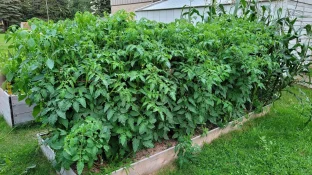
The current state of our tomato jungle (plus a couple tomatillo plants in there too). Last year our tomatoes didn't do so well and this year I planted them in one of our new beds and used the same spacing as I have the last two years. This year they just exploded - and life hadn't yielded us an opportunity to do any sort of trimming. It looks like we'll be starting to harvest tomatoes in a week or so - and that's going to be a challenge with how dense the tomato jungle is! I will definitely not be planting them so closely next year. I did about 16" spacing on these - close enough that I was able to wire tie the cages together for better support.
297030460_799911097710411_2202966367401795554_n.webp

A note on the tomatoes not doing well last year - this year I've got some peppers planted in that same area. Those pepper plants are not doing well, but the pepper plants several feet away in one of the new beds have taken off. After doing some research I've come to suspect that either some soil or compost we bought last year is contaminated with herbicide remnants. There are some things I've noticed will still grow well in those areas, so I plan to plant those types of plants in the areas that I suspect are contaminated for the next few years or so until the herbicide (or whatever it is) hopefully breaks down. If anyone has any ideas on how to perhaps solve this issue, or at least help it along, I'm open to ideas. Especially ideas that don't involve having to remove all the dirt and replace it with new stuff.
 
Great harvest! Glad you are having so much success.

First off, I don't think you are going to have to replace any soil.

Is it just peppers and tomatoes that didn't do well or other plants also? What plants are growing okay in that area?

What do the pepper plants that aren't doing well look like when compared to the "good" peppers? Just generally not as big, or is there something else in their appearance that is off? Leaves not as big, shortened internodes, leaf shape, color... If you could take some pictures of good and bad plants, including whole plant pictures and pictures of individual leaves, that would help diagnose, particularly if it is related to herbicide(s).

As to the area that's not growing so well - do you have any history of the compost or soil? Private source, community composting, etc. I ask because you mention possible herbicide persistence.

Without looking at dozens of possibilities, a majority of herbicides that would be in use on cropland around you should have plantback restrictions of a year or less. There are a few that have restrictions as long as 24 months. However many times, plantback restrictions for vegetable crops aren't listed unless those crops are commercially grown in that area. Regardless, I would expect to see no effect from herbicide persistence by 24 months after application, unless, the soil came from a Christmas tree farm or other managed forestry sites that had some specific herbicides applied. Some of the herbicides used on conifers can be active at very low concentrations, for a longer period of time, when vegetables are grown on that treated soil. Could the soil have possibly come from a commercial lot that had been sprayed in the past?

Any other differences you can think of that are specific to that bed? In other words is the only difference the source of compost/soil. I'm thinking fertility sources, source of wood for the bed, mulch, etc.

Lots of questions, but they should help narrow the possibilities of what is happening.
 
You did have a busy day. I've tried Poblano peppers before and they were quite hot. Ended up pickling them to use in dishes. I thought they would be mild like those you get in a restaurant. How are yours?
 
Great harvest! Glad you are having so much success.

First off, I don't think you are going to have to replace any soil.

Is it just peppers and tomatoes that didn't do well or other plants also? What plants are growing okay in that area?

What do the pepper plants that aren't doing well look like when compared to the "good" peppers? Just generally not as big, or is there something else in their appearance that is off? Leaves not as big, shortened internodes, leaf shape, color... If you could take some pictures of good and bad plants, including whole plant pictures and pictures of individual leaves, that would help diagnose, particularly if it is related to herbicide(s).

As to the area that's not growing so well - do you have any history of the compost or soil? Private source, community composting, etc. I ask because you mention possible herbicide persistence.

Without looking at dozens of possibilities, a majority of herbicides that would be in use on cropland around you should have plantback restrictions of a year or less. There are a few that have restrictions as long as 24 months. However many times, plantback restrictions for vegetable crops aren't listed unless those crops are commercially grown in that area. Regardless, I would expect to see no effect from herbicide persistence by 24 months after application, unless, the soil came from a Christmas tree farm or other managed forestry sites that had some specific herbicides applied. Some of the herbicides used on conifers can be active at very low concentrations, for a longer period of time, when vegetables are grown on that treated soil. Could the soil have possibly come from a commercial lot that had been sprayed in the past?

Any other differences you can think of that are specific to that bed? In other words is the only difference the source of compost/soil. I'm thinking fertility sources, source of wood for the bed, mulch, etc.

Lots of questions, but they should help narrow the possibilities of what is happening.
When I was actively gardening years back, I read a book and several articles about companion planting, which advised that certain plants should not be planted next to others, and vice versa, to achieve optimal potential. Whether that relates to pollination and/or root dominance, or other factors, would be an interesting debate. The other point of interest is soil viability after harvest, and how some crops really leach out, in essence, many needed components that are needed for future crop rotations, while other crops are contributors to the soil. Another topic for debate, and how we can best look at healthy soil enhancements, like adding some species of sawdust (since this forum is all about woodworking), or other forms of organic materials to achieve better soils for crops. Chuck
 
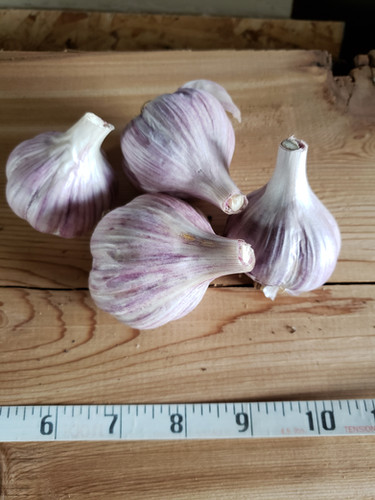
I'm back on my garlic kick. Does anyone ever grow Music? If so how is it? Mild?
 
I'm back on my garlic kick. Does anyone ever grow Music? If so how is it? Mild?
Music is Ok for me. Not fantastic but still far better than what you get in the stores. It's usually a bit hot with less of the garlicky pungency I look for. But I find it really depends on the where/how it's grown and even the climate that season. Yes, garlic can be very much like wine...
It's usually a good strong producer and stores well which I think is one reason it's popular.
 
When I was actively gardening years back, I read a book and several articles about companion planting, which advised that certain plants should not be planted next to others, and vice versa, to achieve optimal potential. Whether that relates to pollination and/or root dominance, or other factors, would be an interesting debate. The other point of interest is soil viability after harvest, and how some crops really leach out, in essence, many needed components that are needed for future crop rotations, while other crops are contributors to the soil. Another topic for debate, and how we can best look at healthy soil enhancements, like adding some species of sawdust (since this forum is all about woodworking), or other forms of organic materials to achieve better soils for crops. Chuck
I think you're talking about The Vegetable Gardener's Bible, Smith - Good book, I've found it useful for years. Sawdust is a fantastic soil amendment, I use it all the time and the worms love it, especially sawdust from bucking oak firewood with the chainsaw, it always goes on the garden or in the compost.

Just a section of the two summary boxes for tomatoes and peppers from The Vegetable Gardener's Bible, Smith. It does say don't follow peppers with tomatoes, even though they are ok grown together.
IMG_4839 copy.webp
IMG_4838 copy.webp
 
Great harvest! Glad you are having so much success.

First off, I don't think you are going to have to replace any soil.

Is it just peppers and tomatoes that didn't do well or other plants also? What plants are growing okay in that area?

What do the pepper plants that aren't doing well look like when compared to the "good" peppers? Just generally not as big, or is there something else in their appearance that is off? Leaves not as big, shortened internodes, leaf shape, color... If you could take some pictures of good and bad plants, including whole plant pictures and pictures of individual leaves, that would help diagnose, particularly if it is related to herbicide(s).

As to the area that's not growing so well - do you have any history of the compost or soil? Private source, community composting, etc. I ask because you mention possible herbicide persistence.

Without looking at dozens of possibilities, a majority of herbicides that would be in use on cropland around you should have plantback restrictions of a year or less. There are a few that have restrictions as long as 24 months. However many times, plantback restrictions for vegetable crops aren't listed unless those crops are commercially grown in that area. Regardless, I would expect to see no effect from herbicide persistence by 24 months after application, unless, the soil came from a Christmas tree farm or other managed forestry sites that had some specific herbicides applied. Some of the herbicides used on conifers can be active at very low concentrations, for a longer period of time, when vegetables are grown on that treated soil. Could the soil have possibly come from a commercial lot that had been sprayed in the past?

Any other differences you can think of that are specific to that bed? In other words is the only difference the source of compost/soil. I'm thinking fertility sources, source of wood for the bed, mulch, etc.

Lots of questions, but they should help narrow the possibilities of what is happening.

The soil that I used as the base for all of my beds - the original beds, as well as the new beds - all came from the same spot. As far as I know, I'm the only one who has gotten dirt from this location, so it is the same dirt for both. Both times some leaves/mulch from our city's compost pile were mixed in. The beds that I'm having an issue in I did add both bagged soil and bagged compost from cow manure - both were purchased at Menards and I couldn't tell you what brand and I can't find it on their website. They were both from their more budget minded selections of bagged soil and compost.

In the bed that I'm having trouble with I've had peas, lettuces, celery, and carrots and all have seemed to do well. Might've had something else in there at some point, but can't remember for certain. The brussel sprout seeds I tossed in the same bed about 5 or 6 weeks ago also seem to be doing well. But the tomatoes and peppers that I've had in that bed... The other original bed hasn't seemed to pose as severe an issue, and had the same bagged soil and compost added to it. But I haven't grown peppers in that bed and the tomatoes I grew in there did a little better overall, but still not great - and nothing like my plants look like this year. The other bed has had garlic, onions, leeks, cucumbers, various small greens and lettuces, and green beans and all have seemed to have done just fine in that bed.

In those same original beds is a 3x4' area where we have strawberries growing. The first year they were nice sized strawberries, and last year and this year (after adding some of the same bagged soil and compost) they are considerably smaller in size and the plants do get some brown on the edges of the leaves.

The new beds I didn't add any bagged soil or compost after getting them going this year. This year I have been fertilizing with this in all the beds - about once every 3 or 4 weeks.

Some comparison pics, with explanation as to which beds their in:

This is a Chocolate Beauty (bell pepper) that is growing very well. About 2' tall and loaded with peppers that all look great and are growing nice and getting to a nice size. I'm really excited for these to mature. This plant been nestled in with beans and cucumbers trying to overtake it, but we keep moving them out when they try to take over.

CB1.webp

This is a Purple Beauty (bell pepper) that was bought from the same garden center as the Chocolate Beauty, was the same size plant at transplanting, and was transplanted at the same time. I've picked a few very small peppers from it - about 1 1/2" long, 1" diameter and they've already ripened and changed color to purple. Seems like it's doing what I've read plants will sometimes to - it's stressed so it's trying to get seeds produced as quickly as possible. (Like my spring planting of bok choy bolting not long after starting to grow up because we got some really hot weather pretty quickly.) This plant is about 1' tall and definitely not filled out. Pepper plants in this bed have never really gotten more than about 12 to 15" tall, at best, and haven't typically produced much fruit, and what fruit has been produced by plants in this bed usually isn't of the size one would expect. Except the shishitos which, while I suspect would grow bigger and produce even more in one of the newer beds, have still overall been pretty good producers of peppers of the size I'd expect to get from them.

PB1.webp

A couple more shots of pepper plants from the same bed. All are like this in some way. The shishito peppers are the only ones that seem to be doing ok (at least 4 of the 5 plants are), but I'm sure would be doing much better if in a different bed.

Peppers.webp

299048184_382662170665568_6769725710906767884_n.webp

298167499_1262499177886848_6250636968877059580_n.webp

Here are some shots of pepper plants in one of the other new beds. These are all growing well with good size plants and an abundance of fruit growing and getting to expected size. Noting a little of the yellow/brown showing up on a few of the leaves here just very recently.

Cubanelles

C1.webp

Forgot to get a pic, but have a few bell pepper plants (that the squash keeps trying to overtake) that are doing well and setting some nice fruits on as well.

And one of our Poblanos in the new bed, which I've noticed is exhibiting a fair amount of the yellow/brown now, but it a good sized plant and is growing some nice fruits on it.

P1.webp

P2.webp
 
Thanks for the great pictures ond narrative! That definitely helps eliminate some potential causes, even if I'm not sure exactly what's going on.

1. I'm almost certain that herbicide contamination is not the cause of your problems. It would be very rare for bagged soils and compost to have any biologically active herbicide amounts in them. Furthermore, if there was contamination, it would affect more than just peppers and tomatoes. Finally, I see no symptoms of herbicide injury, and some would definitely be present with the poor plant growth you are seeing.

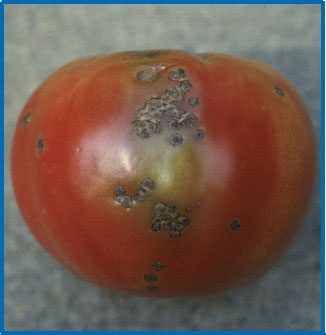
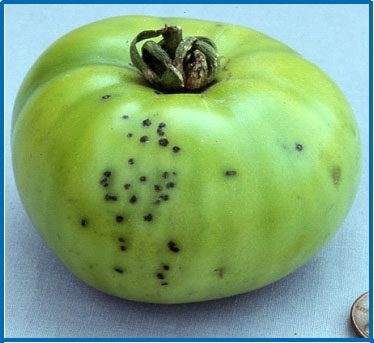
2. The lesions you are showing on the peppers is likely either bacterial spot (Xanthomonas), bacterial speck (Pseudomonas) or Cercospora leaf spot. It's tough to tell for sure from pictures and without a lab analysis. Here are a couple publications for you to look at.


I lean towards it being one of the bacterial leaf spots instead of the cercospora. One way to potentially tell the difference between the bacteria is the Xanthomonas is known to cause fruit lessions while the Pseudomonas doesn't. No real treatment other than planting clean seed/transplants and remove and destroy all vegetation each year to prevent overwintering of the bacteria (or fungus if that is the case).

Having gone through a little plant pathology lecture, I don't think the foliar diseases are the cause of the stunting and poor growth, rather the stunted plants are showing more susceptibility to infection.

3. Since you are fertilizing the beds similarly I don't believe there are any fertility issues. Nor do I see any fertility deficiency symptoms.

4. Having said all that, the only other thing that pops into my mind is soil compaction/structure. When you were adding the top soil and compost to the beds, was it just poured in, or was it all mixed together along with the existing soil? Bagged soil and compost don't always have great soil structure, and if they aren't mixed well with existing soil, they can form layers that compact and can prevent root growth through those layers. An easy way to test that theory is to push a rod as far as you can into the soil in several areas and see if you can detect any differences. May be a long shot that compaction is an issue, but it's easy enough to check.

5. Diagnosing plant problems is never easy, and sometimes there is no clear answer. Going forward, I'd do what you already suggested and plant things other than pepper and tomatoes in the affected areas for a couple years. Also, if the stunted pepper plants aren't really going to produce anything I'd remove them now along with any dropped leaves to reduce disease innoculum that may infect your good looking plants. This fall after everything has frosted off, remove all tomato and pepper foliage including dropped leaves and burn or bag it.

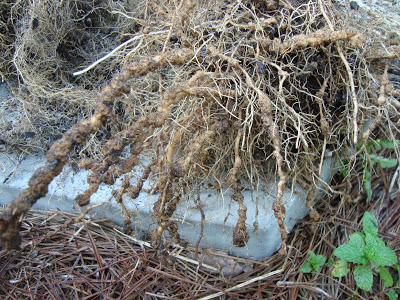
6. One other thing to consider is root knot nematode. You cant see the nematodes with your naked eye, but you can definitely diagnose the damage from visual symptoms of the roots. This particular nematode does infect a wide range of crops to varying degrees, but does not infect corn. Here is a fact sheet.


If you decide to remove some/all of the pepper plants, dig them keeping the root mass intact and wash so you can compare the root appearance to pictures of root knot nematode damage.

Hope some of this helps!
 
The soil that I used as the base for all of my beds - the original beds, as well as the new beds - all came from the same spot. As far as I know, I'm the only one who has gotten dirt from this location, so it is the same dirt for both. Both times some leaves/mulch from our city's compost pile were mixed in. The beds that I'm having an issue in I did add both bagged soil and bagged compost from cow manure - both were purchased at Menards and I couldn't tell you what brand and I can't find it on their website. They were both from their more budget minded selections of bagged soil and compost.

In the bed that I'm having trouble with I've had peas, lettuces, celery, and carrots and all have seemed to do well. Might've had something else in there at some point, but can't remember for certain. The brussel sprout seeds I tossed in the same bed about 5 or 6 weeks ago also seem to be doing well. But the tomatoes and peppers that I've had in that bed... The other original bed hasn't seemed to pose as severe an issue, and had the same bagged soil and compost added to it. But I haven't grown peppers in that bed and the tomatoes I grew in there did a little better overall, but still not great - and nothing like my plants look like this year. The other bed has had garlic, onions, leeks, cucumbers, various small greens and lettuces, and green beans and all have seemed to have done just fine in that bed.

In those same original beds is a 3x4' area where we have strawberries growing. The first year they were nice sized strawberries, and last year and this year (after adding some of the same bagged soil and compost) they are considerably smaller in size and the plants do get some brown on the edges of the leaves.

The new beds I didn't add any bagged soil or compost after getting them going this year. This year I have been fertilizing with this in all the beds - about once every 3 or 4 weeks.

Some comparison pics, with explanation as to which beds their in:

This is a Chocolate Beauty (bell pepper) that is growing very well. About 2' tall and loaded with peppers that all look great and are growing nice and getting to a nice size. I'm really excited for these to mature. This plant been nestled in with beans and cucumbers trying to overtake it, but we keep moving them out when they try to take over.

View attachment 230372

This is a Purple Beauty (bell pepper) that was bought from the same garden center as the Chocolate Beauty, was the same size plant at transplanting, and was transplanted at the same time. I've picked a few very small peppers from it - about 1 1/2" long, 1" diameter and they've already ripened and changed color to purple. Seems like it's doing what I've read plants will sometimes to - it's stressed so it's trying to get seeds produced as quickly as possible. (Like my spring planting of bok choy bolting not long after starting to grow up because we got some really hot weather pretty quickly.) This plant is about 1' tall and definitely not filled out. Pepper plants in this bed have never really gotten more than about 12 to 15" tall, at best, and haven't typically produced much fruit, and what fruit has been produced by plants in this bed usually isn't of the size one would expect. Except the shishitos which, while I suspect would grow bigger and produce even more in one of the newer beds, have still overall been pretty good producers of peppers of the size I'd expect to get from them.

View attachment 230375

A couple more shots of pepper plants from the same bed. All are like this in some way. The shishito peppers are the only ones that seem to be doing ok (at least 4 of the 5 plants are), but I'm sure would be doing much better if in a different bed.

View attachment 230376

View attachment 230370

View attachment 230369

Here are some shots of pepper plants in one of the other new beds. These are all growing well with good size plants and an abundance of fruit growing and getting to expected size. Noting a little of the yellow/brown showing up on a few of the leaves here just very recently.

Cubanelles

View attachment 230371

Forgot to get a pic, but have a few bell pepper plants (that the squash keeps trying to overtake) that are doing well and setting some nice fruits on as well.

And one of our Poblanos in the new bed, which I've noticed is exhibiting a fair amount of the yellow/brown now, but it a good sized plant and is growing some nice fruits on it.

View attachment 230373

View attachment 230374
I think it's calcium deficiency in the peppers.
Could make a foliar spray with crushed eggshells dissolved in Apple Cider Vinegar.
 
I planted my garden gorilla's today. Otherwise known as the Potimarron Squash.

Seven days exactly since putting the seeds in the soil blocks. Having these grow lights is really a game changer. Maybe I just need to hang a few grow lights outside in the garden? :lol2: Now I just need to keep some damned rodent from eating them.

This is impressive growth for seven days since the seed hit the soil. Those soil blocks are 2"x2" for scale. The smaller plants on the right are a Russian Cuke.

IMG_4840.jpg

The true leaves just starting to come in, really neat vein structure.
IMG_4851.JPG


We've been getting killed here with a bad drought the past several weeks, the parts of my yard that aren't getting watered look like a dead wasteland. The trees are turning brown and losing leaves like it's fall. So far the forcast is calling for an inch of rain on Monday, we'll see.
 
Last edited:
Thanks, guys! Unfortunately I'm going to be away from the garden for most of this week, so doing anything will have to wait until Friday - but I have a good idea of what I need to look into and do.

Tim, yes, I did work the soil and compost in - we have a twist tiller that is great for working in the beds and I do make sure it's loose before planting each spring.
 
I think you're talking about The Vegetable Gardener's Bible, Smith - Good book, I've found it useful for years. Sawdust is a fantastic soil amendment, I use it all the time and the worms love it, especially sawdust from bucking oak firewood with the chainsaw, it always goes on the garden or in the compost.

Just a section of the two summary boxes for tomatoes and peppers from The Vegetable Gardener's Bible, Smith. It does say don't follow peppers with tomatoes, even though they are ok grown together.
View attachment 230341
View attachment 230342
Book title was actually, A-Z of Companion Planting by Pamela Allardice. Reallly opened my eyes to compatabilities of various crops, similar to the excerpts you have included herein. Chuck
 
Shell beans are about ready. Hopefully we will have one of my favorite late summer side dishes for supper, fresh succotash.

IMG_20220821_074542668_HDR.webp
 
Picked the first muskmelon today and starting to can tomatoes. For reference, the largest melon weighs in at 8 lbs.

PXL_20220826_182329778.webp
 
Seed Saving....
I just got several packets of seeds I ordered and was wondering if there's any special way to store them over the Winter?

2) I thought there was something about not saving non-heirloom seeds. I bought some 'Super Romas' plants from the local nursery this Spring and I'd like to try some plants myself next year. Storage?

It's sad I'm planning next year's garden now while this year is still going on. The okra is barely producing since we've had two weeks of cool weather. Tomatoes look terrible and are barely producing. The only single heirloom tomato that I have looks great. Sunflowers are doing good and my fourth planting of green beans are about 2' high. I'm guessing potatoes need digging since the vegetation has died back.
 
Seeds storage should be cool and dry. I keep mine in the basement on a shelf next to exterior wall. As long as seeds aren't exposed to excessive heat, many will be good for years. Generally, larger seeds won't remain viable as long as smaller seeds.

The problem associated with saving seed from plants from the store is many of them are hybrids and may not grow true to form. Depends also on the type of plant and how pollination occurs. For plants that primarily self pollinate you will have good success saving seed and having it grow true to form. Those that are insect or wind pollinated are much less likely to grow true.

Potatoes will actually store well in the ground. I've already vine killed mine, but I won't dig them until October when it cools down enough to cool off the basement stairwell in the garage. You may loose some to varmints or rot, but not as many if you dig them now and don't have cool storage for them.
 
Back
Top