• New Woodbarter Hats Are Available!!! Scroll down on the main page to the Member Activities & Site Support, Then click on Wood Barter SCHWAG and go to the topics on hats by Woodtickgreg to order your hat. There's only a limited quanity, so don't wait to get yours.

Most chatoyant wood species?

Arn213

craM de la craM # RipJack City!
Full Member
Messages
4,686
Reaction score
9,460
Location
Knickerbocker, NY
First name
Arn
For some species we tested, though, there is some consistency: Iroko always showed chatoyance (samples from 8 different logs), while ziricote never showed it (6 logs).
I am having a tough time on your test here on ziricote and whether that is conclusive or just isolated incident. It also depends how this log was processed. If this was properly quarter sawn where you see the landscape + spider webbing + the ray flakes the “chatoyance” factor would be more apparent. But if the log was purely flat sawn cut then you have remissed the other factors that makes a piece of wood chatoyant.

Can you post the pieces tested?
 
Last edited:

chatometry

Member
Full Member
Messages
736
Reaction score
1,277
Location
Italy
First name
Paolo
  • Thread Starter Thread Starter
  • #23
@Arn213
Thanks for pictures and information on Koa. So, if I get it right, you are saying that Koa always has some chatoyance, sometimes evident and sometimes not so evident; am I right?

Speaking about figure, I want to show two examples from Juglans Regia: the first one has a medium chatoyance numerical value (~15), but it is very evident due to figure ("wavy"?). The second one has a much higher value (~24), but it is less noticeable because the brightness peaks are all phased together, and there is no contrasting reference area. But still if you could make a table out of it, with a proper finish, it would appear dark or light depending on the lighting conditions.

test_00750-gif.gif
test_00747-gif.gif

Speaking about Ziricote, the third picture below shows the most chatoyant specimen we got, which scores a very low value(~8); this is absolutely quartersawn (it is a veneer leftover board). We made a total of 54 measurements, on samples from 6 different logs, all finished in the same way as all our samples (sanding up to 1500 grit).

test_00814-gif.gif

The fourth example shows a dark Ipe sample, where chatoyance is visible even if the wood is dark.

test_00462-gif.gif
 

Arn213

craM de la craM # RipJack City!
Full Member
Messages
4,686
Reaction score
9,460
Location
Knickerbocker, NY
First name
Arn
@Arn213
Thanks for pictures and information on Koa. So, if I get it right, you are saying that Koa always has some chatoyance, sometimes evident and sometimes not so evident; am I right?

Speaking about figure, I want to show two examples from Juglans Regia: the first one has a medium chatoyance numerical value (~15), but it is very evident due to figure ("wavy"?). The second one has a much higher value (~24), but it is less noticeable because the brightness peaks are all phased together, and there is no contrasting reference area. But still if you could make a table out of it, with a proper finish, it would appear dark or light depending on the lighting conditions.

View attachment 213844
View attachment 213846

Speaking about Ziricote, the third picture below shows the most chatoyant specimen we got, which scores a very low value(~8); this is absolutely quartersawn (it is a veneer leftover board). We made a total of 54 measurements, on samples from 6 different logs, all finished in the same way as all our samples (sanding up to 1500 grit).

View attachment 213854

The fourth example shows a dark Ipe sample, where chatoyance is visible even if the wood is dark.

View attachment 213855
“You can make this an argument with anything with what you stated. Not all wood species that is deemed to have chatoyant factor will be equal across the board. I have had enough figured Koa that I processed and passed my hands that I can confidently say has some degree of chatoyance and I have had some (still do) that the “shimmer and sparkle” factor is very high. There is a degree of chatoyance that is either low or very high and this is a case by case basis and piece by piece basis. It also doesn’t have to be quarter sawn (well it helps because the flakes helps), bastard cut or flat sawn cut- a good example of these is curly maple. It could be quarter sawn or flat sawn cut and will have chatoyance. Chatoyance from what I have seen and handled- there are ones that has “natural chatoyance” and there are ones with a use of a finish will enhance more of the chatoyance factor”. ^^^^^That is what I am saying and I will stand by that statement all day long.

I like to see the actual veneer photo of that ziricote and the end grain. It doesn’t appear to be true quarter sawn- it’s missing ray flakes. You would have to have a stack of this veneer to be able to have proper read out of the end grain. This is what I am saying that the degree of chatoyant will differ from one piece to one piece, from log to log and even from the areas of the log. Paul brings up something really important that to me visual effects “chatoyance” and when you introduce the quarter sawn cut piece, it will have that additional “sparkle and shimmer”. Here is a piece of true quarter sawn ziricote (left photo) that I have, when the sun hits it, or I rock it to and fro and wet it, you can see the highs and lows of shimmer and sparkle. What makes it more reflective is the presence of the ray flakes in the surface. Interlocked grain will also give you that additional visual textural shimmer and sparkle on certain species- I posted this on a Cuban mahogany piece on a different thread:

2EFF5D55-FAD6-415E-B74E-845FF0B3C689.jpeg

8E6E4B2A-BEA7-4FF8-A097-55CA63A40B1C.jpeg
 
Last edited:

Arn213

craM de la craM # RipJack City!
Full Member
Messages
4,686
Reaction score
9,460
Location
Knickerbocker, NY
First name
Arn
Here is another species that I mentioned as being highly chatoyant. I didn’t post the photo to show off, but to justify what I said and posted earlier on:

1B8C3276-675B-417D-AA7D-E4B3E26B05CD.jpeg

1E496914-8E8A-46DA-96D9-2565C974C034.jpeg

^”Flame redwood notable mention” per post #2”. Sinker flame redwood top photo.
 
Last edited:

phinds

Founding Member
Founding Member
In Memoriam
Messages
11,076
Reaction score
22,282
Location
Cortland, NY
First name
Paul
You should mention w/ the pics that that is curly redwood. It's always good to have pics labeled, especially for those who may just be skimming the thread. Nice pieces.
 
Last edited:

chatometry

Member
Full Member
Messages
736
Reaction score
1,277
Location
Italy
First name
Paolo
  • Thread Starter Thread Starter
  • #27
Thank you for the explanation.
The ziricote piece I posted is not a veneer, but a veneer leftover board about 10mm thick. In september I will be able to provide a photo of the endgrain. These boards are usually perfectly quartersawn; in addition I have ~10 more samples from this and from other leftover boards so I can look for one that shows ray flakes.

To sum up, we have one piece (the one you posted) of ziricote that shows chatoyance; however you will agree that ziricote is not famous for its chatoyance, while Koa or Sapele are... right?

So we are saying that this varies from log to log and even between areas of the same log. Would be worth to take a quartersawn log slice like this (link below) and cut it into samples to measure it? This would be a first approach at showing variation within the same log. (it's another specie, but this is to test the concept)


Beautiful flame redwood pieces!!!
 
Last edited:

phinds

Founding Member
Founding Member
In Memoriam
Messages
11,076
Reaction score
22,282
Location
Cortland, NY
First name
Paul
Paolo, I'm really glad you joined the forum. This has been (and continues to be) an excellent discussion for any wood forum, so I'm happy we're having it here on WB.
 

Mike Hill

Board Whoarder
Full Member
Messages
11,109
Reaction score
27,596
Location
Nashville, TN
First name
Mike
Throwing in my ante.

Black Walnut - usually not the most, but some do have.


or even birds eye maple - this piece if you move the light enough the eyes almost disappear.


And I will show off some koa and some quilted BLM - neither are really sanded well.


chatometry

Member
Full Member
Messages
736
Reaction score
1,277
Location
Italy
First name
Paolo
  • Thread Starter Thread Starter
  • #31
@Mike Hill
Thank you.
We only tested samples from 9 different logs of Juglans Nigra. Results were variable, but never very low or very high: from 12 to 20 (non-chatoyant wood species scores typically <10, while very chatoyant species score typically >20).
Unfortunately we do not have any figured pieces, but this page shows some examples:

Speaking of birdseye maple... beautiful piece! I've read something about it coming only from a specific maple specie (Acer Saccharum), but I am still a bit confused. I have some pieces but I'd like to clarify the species before starting to process them. Also, do you know if Europe also produces it?

Finally, the Koa video you posted is amazing!
I wish I could measure the chatoyance on that piece, also on the heart/sap interface...

For some reason the BLM video you posted does not work on my device :(

Paolo
 

phinds

Founding Member
Founding Member
In Memoriam
Messages
11,076
Reaction score
22,282
Location
Cortland, NY
First name
Paul
Speaking of birdseye maple... beautiful piece! I've read something about it coming only from a specific maple specie (Acer Saccharum) ...
Absolutely not true. It DOES tend to occur more often in Acer Saccharum than in other maples, but "bird's eye" is NOT a species, it is a type of wood figure and it occurs in some woods other than maple in addition to most species of maple.

https://en.wikipedia.org/wiki/Bird's_eye_figure
 

Arn213

craM de la craM # RipJack City!
Full Member
Messages
4,686
Reaction score
9,460
Location
Knickerbocker, NY
First name
Arn
Throwing in my ante.

Black Walnut - usually not the most, but some do have.


or even birds eye maple - this piece if you move the light enough the eyes almost disappear.


And I will show off some koa and some quilted BLM - neither are really sanded well.

Spam and pineapple on that yummy slice of koa- extra cheese please!
 

chatometry

Member
Full Member
Messages
736
Reaction score
1,277
Location
Italy
First name
Paolo
  • Thread Starter Thread Starter
  • #35
Absolutely not true. It DOES tend to occur more often in Acer Saccharum than in other maples, but "bird's eye" is NOT a species, it is a type of wood figure and it occurs in some woods other than maple in addition to most species of maple.

https://en.wikipedia.org/wiki/Bird's_eye_figure
Thanks for the clarification.
The issue I am having with Maple is that in Italy dealers only name it "Acero" (Maple), never providing information on the exact species. So I have many samples, from Europe and North America, labeled as "acer spp." :(

@FranklinWorkshops fantastic!!!
Is there any chance you have a cutoff from that board? Even just a 130*40*2mm strip would be enough to measure its chatoyance.
 

chatometry

Member
Full Member
Messages
736
Reaction score
1,277
Location
Italy
First name
Paolo
  • Thread Starter Thread Starter
  • #39
Thanks again @phinds
I'd like to add our point of view to the discussion. Chatoyance is often discussed together with figure (thanks for the examples everyone posted).
But... let's consider a tiny spot on the surface; as an example, let's take a tiny square on the flame redwood posted by Arn213.
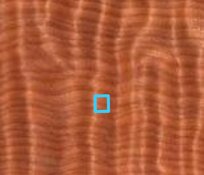
Screenshot_20210812-074224.jpg
On this small are there will not be any figure, but still it will change is brightness depending on the lighting condition.
So the first question would be: how much does the brightness change on this tiny spot when it is lighted from different directions?
This is a bit like density: it's some sort of microscopic property of the material.
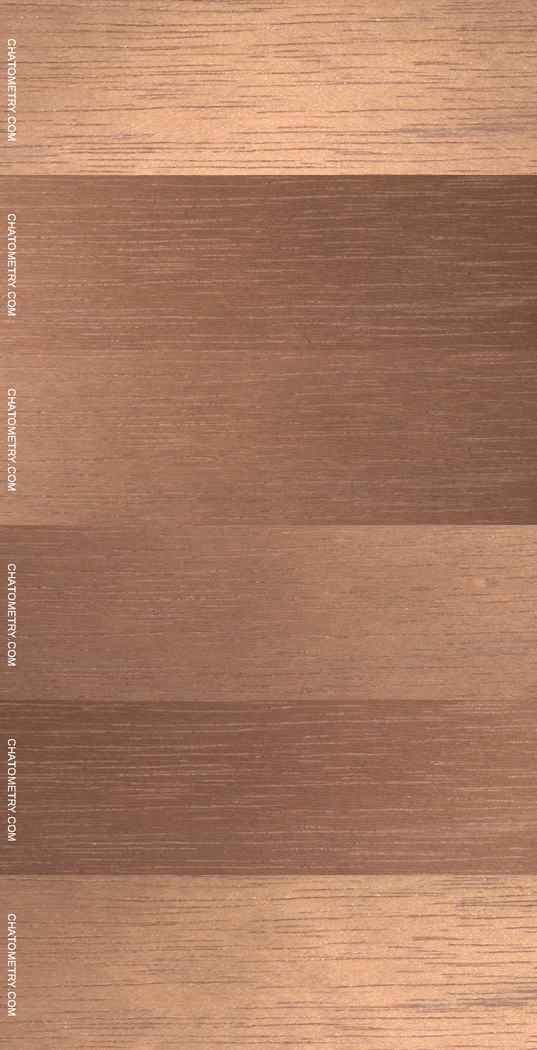
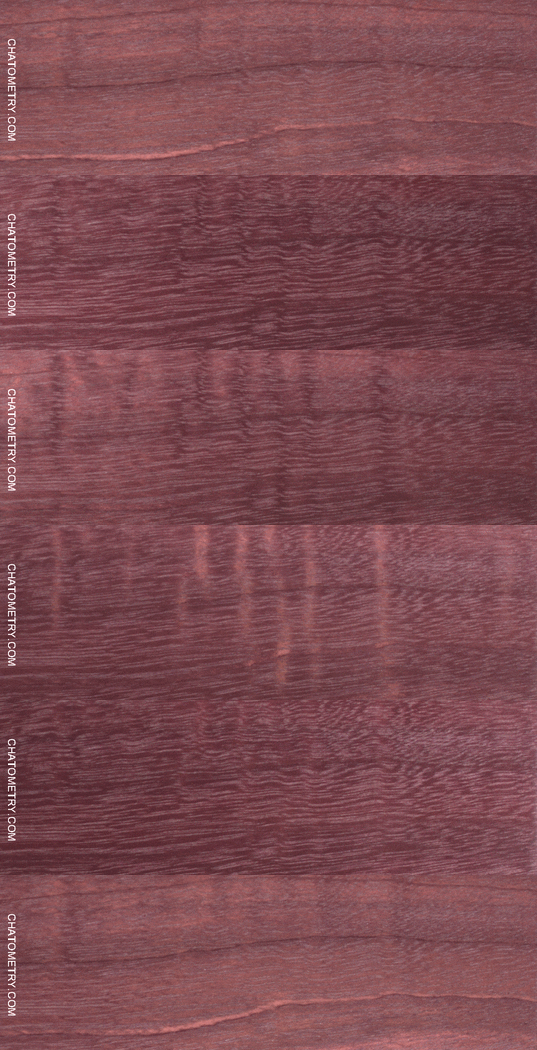
Technically, this property causes the brightness to be a two-peaked function of azimuth lighting direction.
Going to a larger scale, when these peaks are all in phase there will be a uniform change in brightness, such as in this Makore sample (1500-grit sanded, no finish):
test_01401-gif.gif

When these peaks have different phases across the board you get all sorts of figures, such as curl on this Purpleheart sample (1500-grit sanded, no finish):
test_00695-gif-1.gif

Or this (typical) interlocked grain on Sapele (1500-grit sanded, no finish):
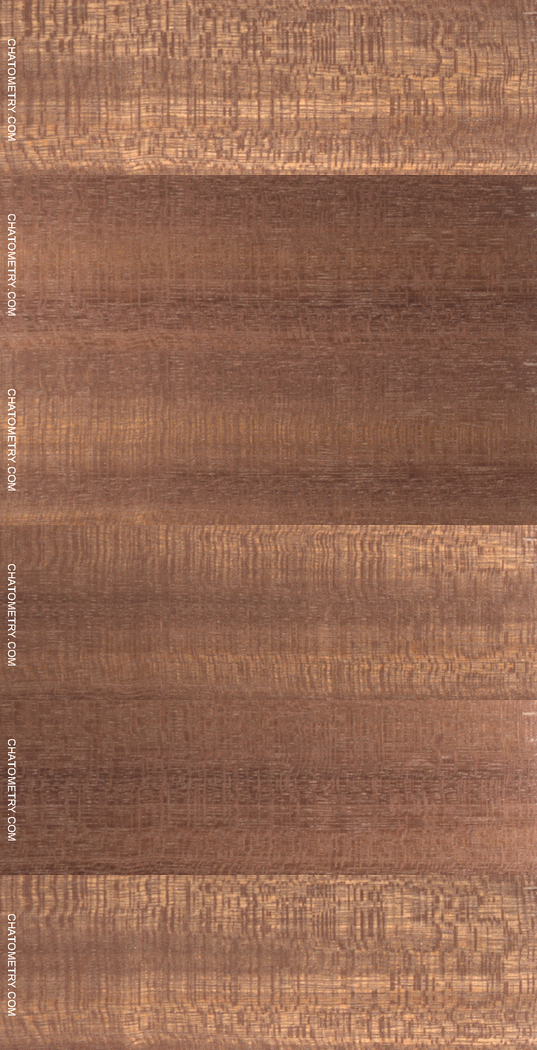
test_00675-gif.gif

It is clear that figure makes chatoyance much more evident...and chatoyance makes figure much more evident too. Simply put, chatoyance provides the change in brigtness, while figure highlights it providing contrasting areas.

Then one might argue that figures such as curl or birdseye cause an overall alteration of fibers with an impact on chatoyance... This is possible. So far, the highest chatoyance readings we have are on straight-grained sections, but this is not conclusive. We will pick a board with both figured and plain areas, cut samples and measure them to see what the numbers are.

 

phinds

Founding Member
Founding Member
In Memoriam
Messages
11,076
Reaction score
22,282
Location
Cortland, NY
First name
Paul
I agree w/ your statements, but ...
So far, the highest chatoyance readings we have are on straight-grained sections
What do you mean by straight grained? Quartersawn? Flat cut? Rift cut? ALL of those can be straight grained and all of them can have, for example, curly figure. So, to my mind, just "straight grained" is vague. Am I missing something?
 
Top