Thanks again
@phinds
I'd like to add our point of view to the discussion. Chatoyance is often discussed together with figure (thanks for the examples everyone posted).
But... let's consider a tiny spot on the surface; as an example, let's take a tiny square on the flame redwood posted by Arn213.
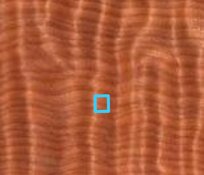
On this small are there will not be any figure, but still it will change is brightness depending on the lighting condition.
So the first question would be: how much does the brightness change on this tiny spot when it is lighted from different directions?
This is a bit like density: it's some sort of microscopic property of the material.
Technically, this property causes the brightness to be a two-peaked function of azimuth lighting direction.
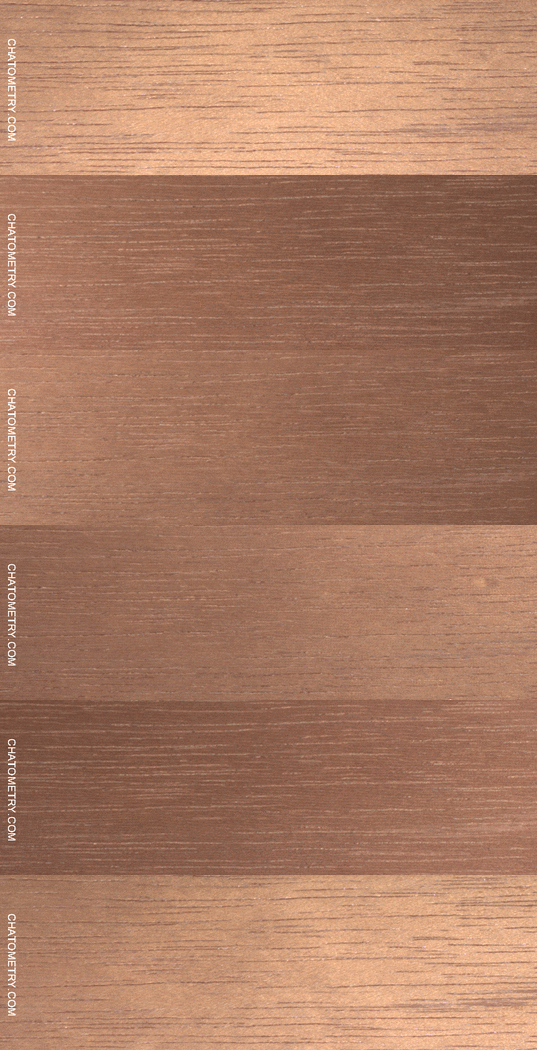
Going to a larger scale, when these peaks are all in phase there will be a uniform change in brightness, such as in this Makore sample (1500-grit sanded, no finish):
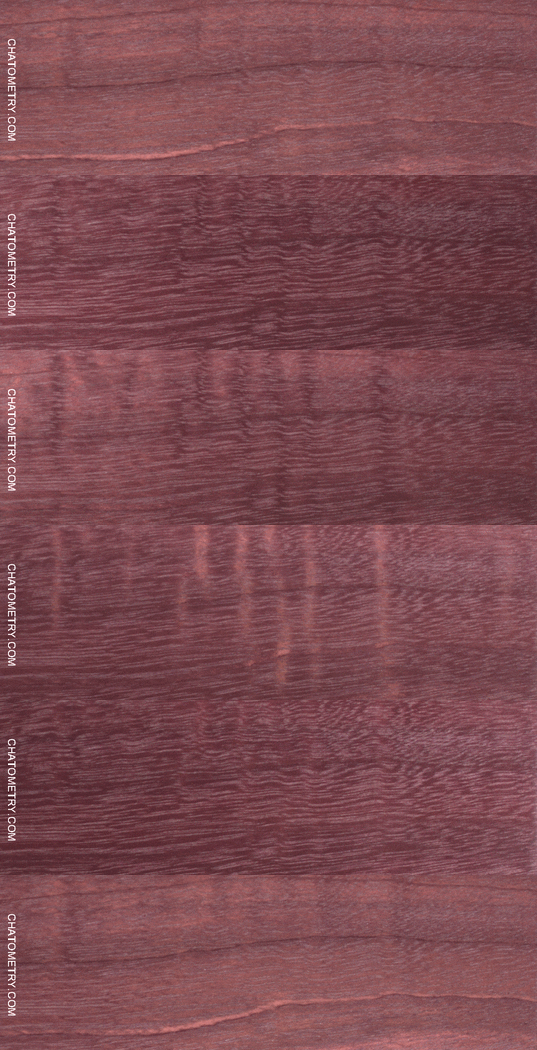
When these peaks have different phases across the board you get all sorts of figures, such as curl on this Purpleheart sample (1500-grit sanded, no finish):
Or this (typical) interlocked grain on Sapele (1500-grit sanded, no finish):
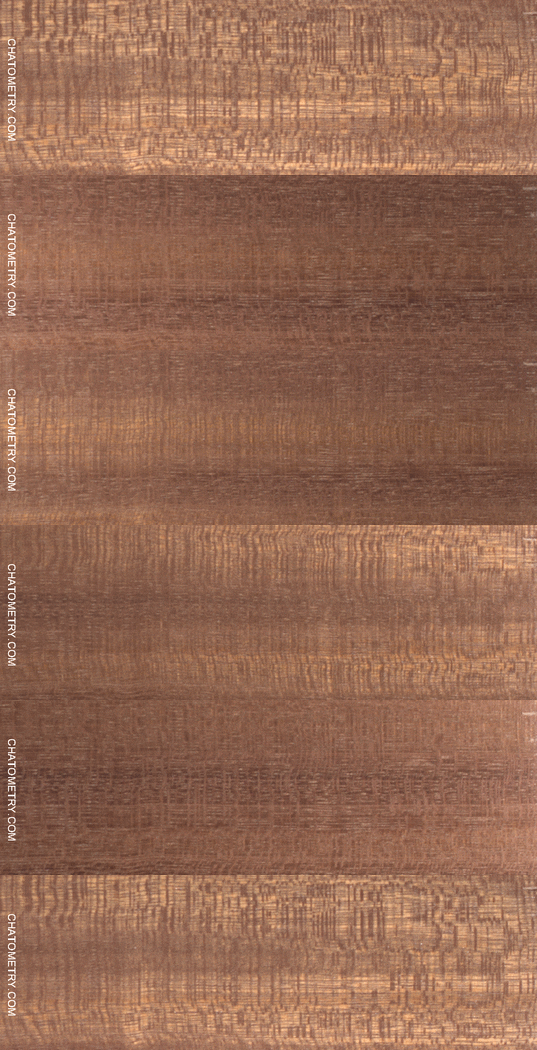
It is clear that figure makes chatoyance much more evident...and chatoyance makes figure much more evident too. Simply put, chatoyance provides the change in brigtness, while figure highlights it providing contrasting areas.
Then one might argue that figures such as curl or birdseye cause an overall alteration of fibers with an impact on chatoyance... This is possible. So far, the highest chatoyance readings we have are on straight-grained sections, but this is not conclusive. We will pick a board with both figured and plain areas, cut samples and measure them to see what the numbers are.