Coming together nicely Web! I really like you will have plenty of natural light in the shop. I'm hoping to build a small 10 x15 shop in my backyard, still this year. I've been working in a 10 x 12 space in my garage for the past five years. I planning to keep (most ) of that space plus the backyard shop. I only have my lathe, bandsaw and combo. disc/belt sander (no flat work) for bigger power equipment. Bandsaw and sander are on wheel platforms, so I will be fine with the space. Also - bought an "almost new" Oneida dust collector to replace my Oneida mini-Gorilla rig I've been using.I got the hardest part of hanging the ductwork for the dust collector done with help of my son-in-law.
View attachment 294607

You are using an out of date browser. It may not display this or other websites correctly.
You should upgrade or use an alternative browser.
You should upgrade or use an alternative browser.
What did you do in your shop today?
- Thread starter woodtickgreg
- Start date


Excited to see what you make with that astonishing wood!Not in my shop but my wood. My buddy up the street ran a milo board and a couple mango boards through his planer to square them up for me. Ready to start another project or two now. Check out the curl and colors in the mango! Thanks Chris ( @Kalai ).
View attachment 294620
View attachment 294621

woodtickgreg
scroll, flat, spin
Staff member
Administrator
Global Moderator
Founding Member
Full Member
Forum Moderator
- Thread Starter Thread Starter
- #12,484
And this is what the slat wall looks like all filled up.
I love to see a plan come to fruition.

I love to see a plan come to fruition.
Nice job Greg. Makes a nice display that can easily be updated and modified to keep it current and to keep people interested.
Last edited:
Wasn't in my shop but was right in front of it. A buddy had a couple benches blow out on him so I agreed to cut out some replacement parts. (Review of warrior ,.by harbor freight tablesaw) /Junk/ smoked out cutting cedar 1 inch stock with a new freud blade. About 40 cuts in.
Fortunately I had a backup rigid job site saw.
Also.note that the wen spiral planer isn't the strongest thing out there. Lasts about 2 years in hobby use then smoked out...
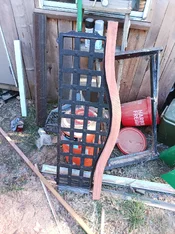
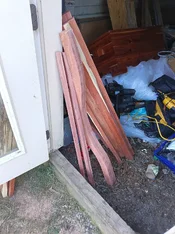 so I cut the pieces out but will not plan to.plane.them to.size.
Fortunately I had a backup rigid job site saw.
Also.note that the wen spiral planer isn't the strongest thing out there. Lasts about 2 years in hobby use then smoked out...
 so I cut the pieces out but will not plan to.plane.them to.size.
Is that like a park bench?Wasn't in my shop but was right in front of it. A buddy had a couple benches blow out on him so I agreed to cut out some replacement parts. (Review of warrior ,.by harbor freight tablesaw) /Junk/ smoked out cutting cedar 1 inch stock with a new freud blade. About 40 cuts in.
Fortunately I had a backup rigid job site saw.
Also.note that the wen spiral planer isn't the strongest thing out there. Lasts about 2 years in hobby use then smoked out...
View attachment 294650View attachment 294651so I cut the pieces out but will not plan to.plane.them to.size.
Yes.Is that like a park bench?
He has two park style benches with the cast inserts in the back. They are more stable than the old style but a pain to cut out.
I'm getting ready to run a stabilizing batch tomorrow. Got my blanks together, did a little minor trimming so they fit, made a taller, slender container for some long cottonwood bark thins Jerry ( @Nubsnstubs ) sent me quite some time ago because I didn't want to cut them shorter. Got the baking oven out and started cooking the blanks to see if they'll dry any more. Using the weight method to check.
UPDATE: My blanks ranged in weight from 28 grams up to I think 59 grams. After over 6 hours in the toaster oven at 275F, the weights either didn't change or went down between 1 - 2 grams. First time I've baked the blanks before stabilizing so I don't know if that's significant or if that's telling me they were pretty dry to begin with. Regardless, they've now been immersed in resin under vacuum of 29mmHg for the last 5 hours.
UPDATE: My blanks ranged in weight from 28 grams up to I think 59 grams. After over 6 hours in the toaster oven at 275F, the weights either didn't change or went down between 1 - 2 grams. First time I've baked the blanks before stabilizing so I don't know if that's significant or if that's telling me they were pretty dry to begin with. Regardless, they've now been immersed in resin under vacuum of 29mmHg for the last 5 hours.
Last edited:

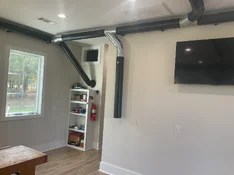
Yesterday I bought a 55” display TV from Costco ($200 even) for the shop and hung it today. Also connected the DC to the ductwork and fired it up for the first time and the closet cuts the noise in half but it’s still got a voice.

Don't forget to run your grounding wires. Don't see any on you dust system yet.Yesterday I bought a 55” display TV from Costco ($200 even) for the shop and hung it today. Also connected the DC to the ductwork and fired it up for the first time and the closet cuts the noise in half but it’s still got a voice.
View attachment 294657
Where are you expecting to see grounding wires? The black pipe is metal stovepipe and all joints have metal screws.Don't forget to run your grounding wires. Don't see any on you dust system yet.
Last edited:

The hay feeder is working about perfect for the fine stem hay they are feeding. Coarse hay might not work as well. Just in the nick of time.Sort of a just outside the shop rough carpenter job. My grandson is really getting into farming, he's up to 9 head of beef cattle. He's rented a neighbor's barn and was in need of a hay feeder for his calving pen. I'm not 100 percent sure of my design but I spent almost no money by using my sawmill lumber. We will put it in the pen today and fasten it to the wall. I might have put my slats a little to close but the harder they have to work for a meal the less they waste. The box under the slats will catch some of the hay to keep it off of the floor and provide a handy spot for the occasional scoop of grain and a salt block.View attachment 294616


Great!The hay feeder is working about perfect for the fine stem hay they are feeding. Coarse hay might not work as well. Just in the nick of time.View attachment 294668
I figured that, but did not see any grounding points. You need those if you plan on insuring the shop. Otherwise it can undermine and cancel out any coverage by your home owners insurance. Static charge can kill. It can mess with medical devices like pacemakers and defibulators. It can also ignite dust with explosive results.Where are you expecting to see grounding wires? The black pipe is metal stovepipe and all joints have metal screws.
All grounding is in the closet. The ductwork is grounded to the motor. The drum is grounded to the motor. The muffler and filter are grounded to the motor.I figured that, but did not see any grounding points. You need those if you plan on insuring the shop. Otherwise it can undermine and cancel out any coverage by your home owners insurance. Static charge can kill. It can mess with medical devices like pacemakers and defibulators. It can also ignite dust with explosive results.
My question to you is what are the grounding points you are talking about? I ask the question because I don’t think I’ve missed anything.
Last edited:
Usually there is a bonding wire on the trunk lines to direct the static electricity to ground like that seen on fences around swimming pools. Without it, the trunk lines build a static field around them and free radical dust is attracted and ends up as a dark streak on the ceiling. Often these bonding lines are some of the first items fire marshals look for when investigating.All grounding is in the closet. The ductwork is grounded to the motor. The drum is grounded to the motor. The muffler and filter are grounded to the motor.
My question to you is what are the grounding points you are talking about? I ask the question because I don’t think I’ve missed anything.
You say the grounding is in the closet, but what grounding is at each machine, other than the duct to the machine by dust port? I know several shops that ran a designated line to each machine for such purposes. I have seen guys run jumpers from the machine and duct line to the neutral of the machine power outlet as well. Think that is a code issue in most places now. I also know many shops that simply run a jumper from the duct line to the machine.
Just wanted to ask being better to do before than to ask after. Shop humidity also plays a big part with static risks. I just want you to be safe when enjoying your shop.
Machines are grounded when plugged into the wall (3 prong) and the ductwork is grounded to the collector. Why would a jumper be needed from the ductwork to the machine?
The jumper is a directional ground. It allows the flow to go to the closest ground. And yes, then the machine ground takes the charge. With static, the longer the path the more variable the outcome, implying it could disapate or it could build more charge.Machines are grounded when plugged into the wall (3 prong) and the ductwork is grounded to the collector. Why would a jumper be needed from the ductwork to the machine?
There are thousands of wood shops in homes everywhere that fail to do any safety grounding and they do just fine. However, it is a gamble.
Thanks Mark.